
Diet and Lifestyle Choices That Amplify Menopause Symptoms
Many women focus on what to add during menopause — supplements, HRT, new routines — without realising that removing certain triggers can reduce symptoms just as effectively. The menopausal body is more sensitive to inflammatory inputs, blood sugar swings, and hormonal disruptors than it was in your 30s.
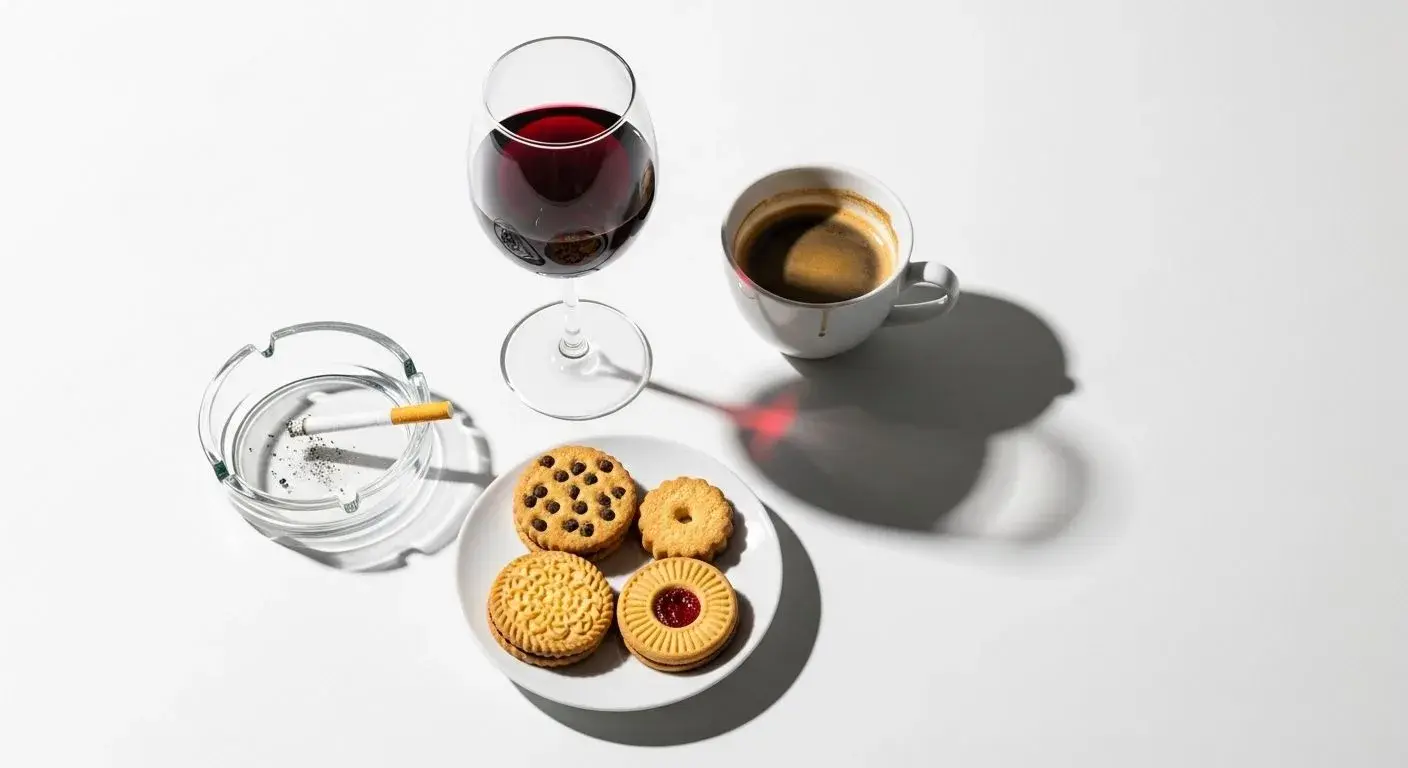
Alcohol is the most consistent symptom amplifier. Even one or two drinks raise core body temperature, disrupt slow-wave sleep, and suppress REM cycles — all of which worsen hot flushes, night sweats, brain fog, and next-day mood. The common belief that a glass of red wine 'relaxes' the nervous system is contradicted by what actually happens hormonally: alcohol spikes cortisol within hours of consumption, raising the stress response at a time when the HPA axis is already dysregulated.
Refined sugar and ultra-processed carbohydrates drive rapid insulin spikes that destabilise oestrogen signalling and promote visceral fat accumulation around the abdomen — the most common complaint of menopausal women. Cutting ultra-processed foods is one of the highest-leverage dietary changes available, yet it is consistently underemphasised compared to 'eating more phytoestrogens'.
Skin, Beauty and Environmental Triggers to Reconsider
Skincare habits that worked in your 30s can actively damage menopausal skin. Over-exfoliation — a widespread mistake — strips the already-thinning skin barrier and triggers reactive sebum production, which ironically worsens the oily skin changes seen in perimenopause. Limit physical exfoliation to once per week maximum.
Synthetic fragrances — in perfumes, skincare, and laundry products — act as endocrine disruptors, binding weakly to oestrogen receptors and creating hormonal noise. For women already navigating oestrogen fluctuation, this additional disruption is worth minimising. Switch to fragrance-free laundry detergent and unscented body products as a baseline.
Common misconception: Many women believe that high-SPF sunscreen is optional once the skin becomes drier and thinner. The opposite is true. Menopausal skin loses collagen faster and has less melanin protection — making UV damage more rapid and more severe. Skipping daily SPF is one of the most impactful accelerators of menopausal skin ageing.
Behavioural and Medical Traps That Worsen the Menopause Transition
Avoiding all exercise is one of the most common — and most damaging — responses to menopause fatigue. Low-intensity movement, particularly strength training, directly counteracts the muscle loss, bone density reduction, and metabolic slowdown that accompany falling oestrogen. Women who rest in response to fatigue often feel worse within weeks.
Prolonged, unmanaged stress is equally harmful. Chronic cortisol elevation suppresses progesterone synthesis, worsens sleep, promotes visceral fat, and accelerates bruising and skin fragility. If you have noticed your skin bruising more easily than before, stress physiology and collagen loss are likely contributors — menopause bruising causes and prevention explains this in detail.
Edge case to know: Some women try soy-based phytoestrogen supplements expecting significant symptom relief, unaware that they require a specific gut microbiome composition (the ability to produce equol) to be effective. Approximately half the population lacks this capacity. If soy supplements are not working after 8 weeks, this is likely why — and it is not a reflection of the symptom severity.