
Why Menopause Makes Your Skin Itch — and Why Regular Lotions Fall Short
Itchy skin during menopause — known clinically as pruritus — is not simply 'dry skin.' Declining estrogen directly reduces the skin's production of ceramides, hyaluronic acid, and sebum. The result: a compromised moisture barrier that loses water faster than it can retain it. This is why a standard drugstore moisturizer often provides only 20 minutes of relief before the itch returns.
The itch can appear anywhere — arms, legs, back, and notably the face — and tends to be worst at night when skin temperature rises. Many women describe it as a crawling or prickling sensation rather than a surface itch, which signals nerve involvement, not just surface dryness. Understanding this distinction changes which lotion you should reach for. For a deeper look at the root causes, explore the full breakdown of menopause itching causes and treatments.
The key misconception: heavier = better. Women frequently switch to thick body butters, assuming more occlusion means more relief. But if a lotion lacks humectants to draw moisture into the skin before sealing it in, even the richest cream just traps dryness underneath. The correct sequence is humectant first, then emollient or occlusive — not the reverse.
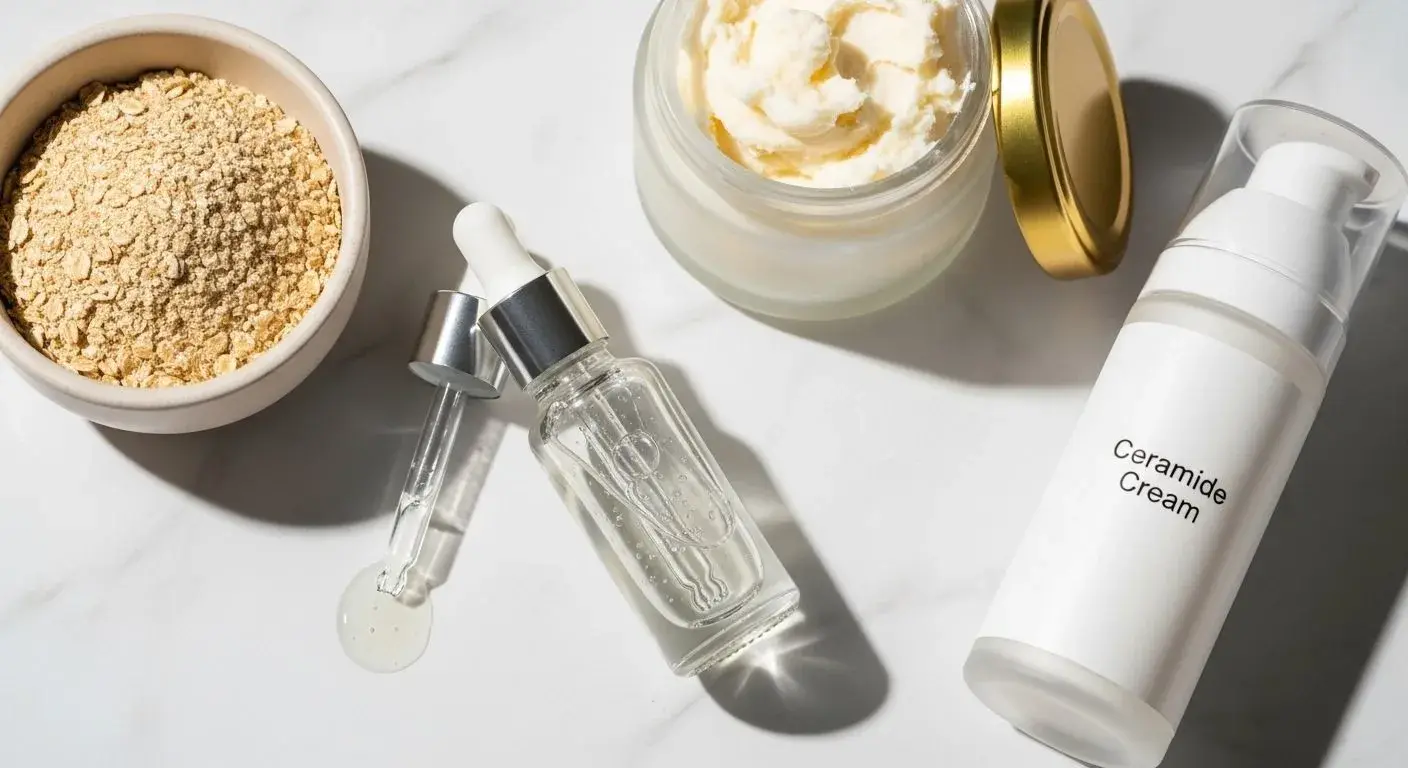
What to Look For in an Anti-Itch Lotion for Dry Menopausal Skin
Not all anti-itch lotions are built equally. For menopause-related itch, prioritize formulas that address all three layers of the skin barrier simultaneously. Here is what the label should show:
- Colloidal oatmeal (1%): The only FDA-recognized skin protectant specifically for itch. It contains avenanthramides — natural anti-inflammatory compounds that calm nerve endings, not just surface dryness. Essential for 'crawling' itch types.
- Ceramides (NP, AP, or EOP): Estrogen loss depletes these lipids in skin. Replacing them topically rebuilds the moisture barrier from within. Look for at least two ceramide types for synergistic effect.
- Glycerin or hyaluronic acid: Humectants that pull water into the skin before an emollient seals it. Without these, creams sit on top of a dehydrated surface.
- Low-fragrance or fragrance-free formula: Menopausal skin is more reactive. Fragrance — even natural — is a leading irritant that perpetuates itch cycles. This is non-negotiable.
For itchy face skin specifically: body lotions are often too heavy and can clog pores or aggravate rosacea, which frequently flares during perimenopause. Opt for a lightweight ceramide-rich face cream or gel-cream hybrid. Avoid anything with alcohol denat. in the top five ingredients — it evaporates quickly and leaves skin drier than before. You can find targeted topical options reviewed in depth at our guide to the best skin creams for menopause.
When Anti-Itch Lotion Isn't Enough — and What to Do Instead
Topical lotions manage symptoms. They do not correct the underlying hormonal shift. If your itch is severe, bilateral (both sides of the body), or wakes you from sleep consistently, a lotion will offer only partial relief — and that is not a failure of the product, it is a signal worth paying attention to.
The trade-off most articles omit: anti-itch lotions containing menthol or camphor feel immediately cooling and satisfying, but they can disrupt the skin microbiome with daily use and cause rebound itching within hours. They work well for acute flares, not as daily moisturizers. If you've been using a 'cooling' lotion every day and notice the itch returning faster each time, this is likely the mechanism.
Application timing also matters more than most expect. Applying lotion to slightly damp skin (within 3 minutes of bathing) increases absorption by up to 50% compared to applying it to fully dry skin. Lukewarm — not hot — water prevents the vasodilation that intensifies itch at night. If standard emollient therapy has been consistent for 4 to 6 weeks without meaningful relief, a dermatologist can assess whether short-term topical corticosteroids or non-steroidal alternatives like crisaborole are appropriate. Prescription-level options exist and should not be dismissed as 'too aggressive' — persistent itch affects sleep quality and mood significantly during menopause.