
What Oestrogen Cream After Menopause Actually Does
Oestrogen cream applied locally to the vagina and vulva after menopause works by directly restoring the oestrogen-depleted tissue in that area. Unlike systemic HRT, which raises oestrogen throughout the body, local oestrogen acts primarily at the site of application — reversing the atrophic changes that cause vaginal dryness, soreness, painful sex, urinary urgency, and recurrent urinary tract infections.
The documented benefits of local oestrogen cream after menopause include: restoration of vaginal wall thickness and elasticity, normalisation of vaginal pH (which reduces recurrent thrush and bacterial vaginosis), significant reduction in dyspareunia (painful sex), reduced frequency of recurrent UTIs by restoring urethral and bladder neck tissue integrity, and improved vulvar comfort and moisture. These are not minor quality-of-life improvements — for many women they represent the difference between functional and severely restricted daily life.
What local oestrogen does not reliably address are systemic menopause symptoms: hot flushes, night sweats, mood changes, sleep disruption, and joint pain. These require systemic oestrogen through HRT patches, gel, or tablets. Women seeking both local and systemic benefits need to discuss a combined approach with their GP. See also best menopause face cream and skincare for how facial skin benefits from a different category of skincare designed around oestrogen-driven collagen loss.
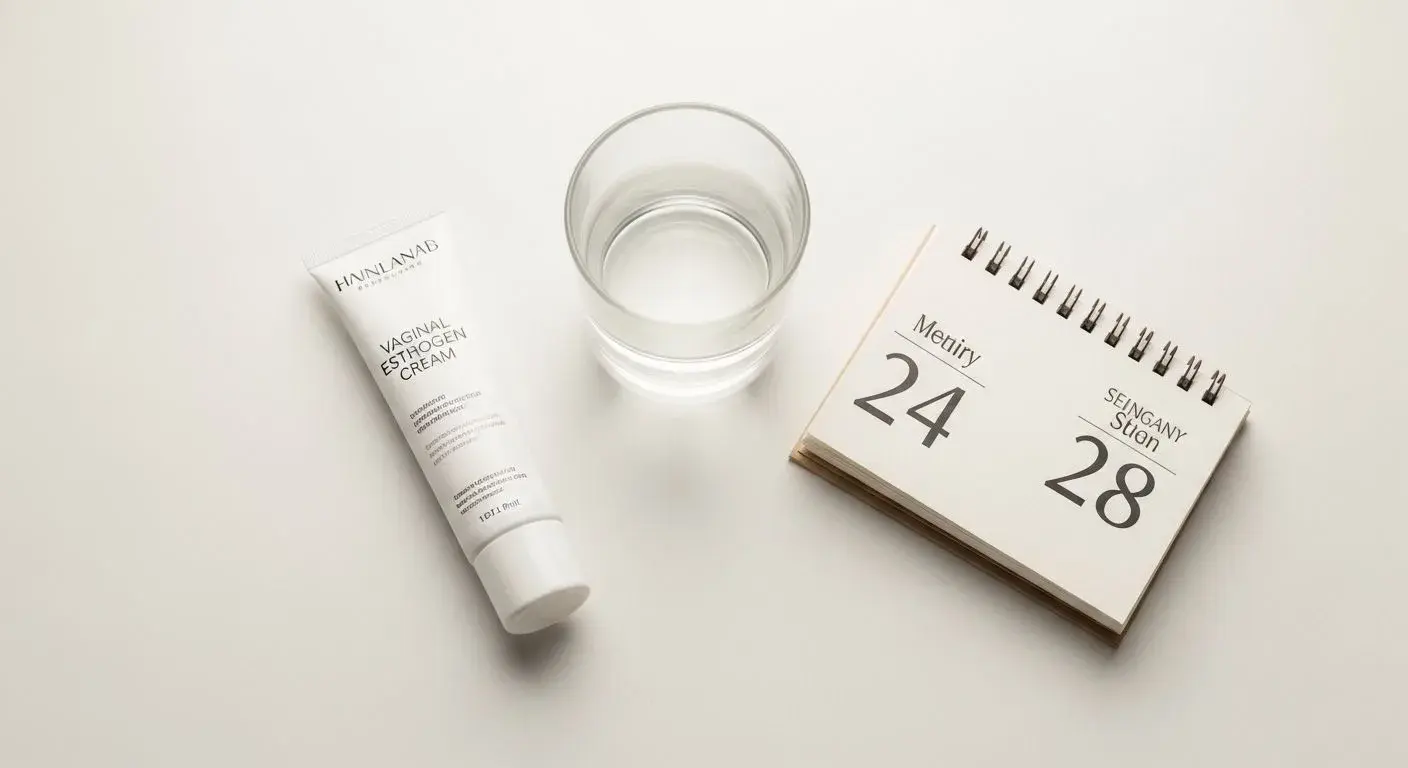
Over-the-Counter Oestrogen Creams: What They Can and Cannot Do
In most countries including the UK, prescription-strength vaginal oestrogen (such as Vagifem pessaries, Ovestin cream, or Estring ring) requires a GP prescription. Over-the-counter products marketed as 'oestrogen creams' are typically either phytoestrogen-based (containing soy isoflavones, wild yam, or red clover) or are non-hormonal moisturisers with oestrogen-like marketing language.
Critical distinction: OTC 'wild yam cream' and similar products do not convert to progesterone or oestrogen in the human body despite marketing claims. The human body cannot perform the laboratory conversion required. Women relying on wild yam cream as a hormonal treatment are receiving none of the tissue-restorative benefits of actual oestrogen. This is one of the most persistent and consequential misconceptions in the menopause supplement space.
What OTC products can legitimately offer: non-hormonal vulvar and vaginal moisturisers with hyaluronic acid and lactic acid (such as Replens or YES VM) address the symptom of dryness without hormonal action and are genuinely effective for mild-to-moderate atrophy symptoms. They are appropriate as a first step or for women who cannot use oestrogen. For best skin cream recommendations aligned with menopause-related tissue changes more broadly, see best skin cream for menopause.
Safety, Who Should Use It, and When Standard Advice Fails
Local oestrogen cream is considered safe for the vast majority of postmenopausal women, including many who have been advised to avoid systemic HRT. Systemic absorption is minimal — studies show that vaginal oestrogen at standard doses does not produce blood oestrogen levels meaningfully above the postmenopausal baseline. Most oncology guidelines now support local oestrogen use in women who have had non-hormone-sensitive cancers, and many specialists are increasingly flexible on its use even in oestrogen-receptor-positive breast cancer survivorship, where quality of life must be weighed carefully.
Common misconception: Many women and GPs believe that local vaginal oestrogen requires endometrial protection (a progestogen). For the doses used in local vaginal preparations, the systemic absorption is insufficient to stimulate the endometrium, and no additional progestogen is required — a point now reflected in UK menopause guidelines (NICE NG23). Women being declined local oestrogen because 'it needs to be balanced with progesterone' may be receiving outdated advice.
When standard advice fails: Women using vaginal oestrogen cream for 3 months with limited improvement should be assessed for concurrent conditions. Lichen sclerosus, lichen planus, and contact dermatitis all present similarly to atrophy but require different treatments. A vulvoscopy (specialist examination) is appropriate for persistent symptoms that do not improve as expected.