
Why Menopause Itching Needs a Different Approach Than Regular Dry Skin
Menopause itching is not simply dryness — it is a neurological and hormonal response. As oestrogen declines, the skin produces less ceramide, collagen, and natural moisturising factor (NMF), causing the barrier to break down. But simultaneously, mast cells in the skin become more reactive, releasing histamine at lower thresholds than before. This is why many women find standard dry-skin lotions barely touch the itch. For a full explanation of what drives this reaction, see menopause and perimenopause itching: causes and treatment.
The practical implication is that treatment works best when it targets both the impaired barrier and the heightened histamine response — not one or the other. A rich cream alone may help structurally but leave the itch cycle running. An antihistamine alone may calm the reaction temporarily but allow the barrier to continue degrading.
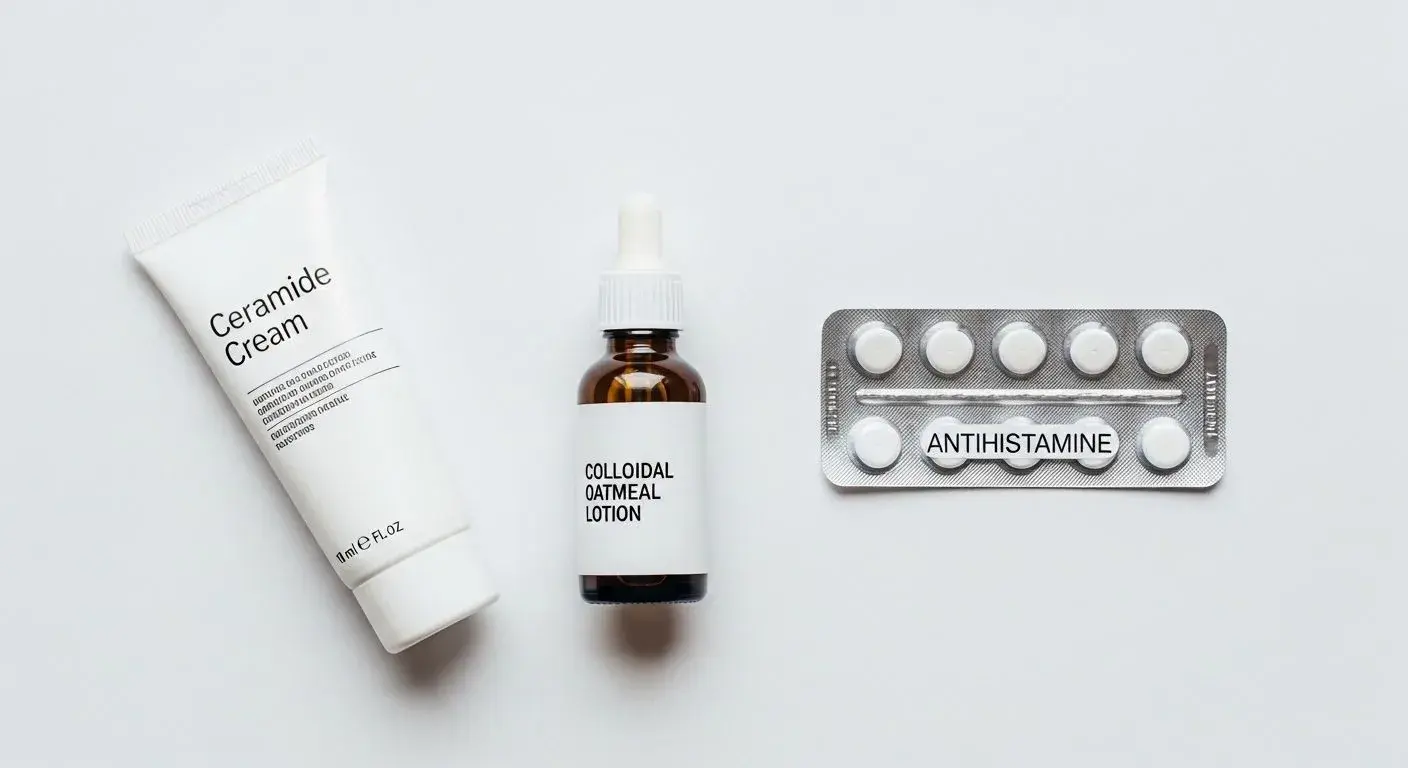
- Barrier repair creams: Work on the structural cause. Look for ceramides, niacinamide, and colloidal oatmeal as core actives.
- Topical antihistamines: Reduce localised mast cell activity. Best for acute flares on small areas. Not recommended for widespread use due to absorption risk.
- Oral antihistamines: More appropriate when itching is systemic or disrupts sleep. Second-generation options (cetirizine, loratadine, fexofenadine) cause significantly less sedation.
What to Look for in a Menopause Itching Cream
Not all moisturisers marketed for sensitive or mature skin are genuinely effective for hormone-driven itch. The most common misconception is that any thick, fragrance-free cream will do. In practice, the active ingredient list matters enormously. Women in perimenopause often report that creams which worked for decades suddenly stop providing relief — this is because the skin's changed biology requires different actives, not just more hydration.
For a menopause-specific cream to be effective, it should address itch at multiple levels. Colloidal oatmeal (1% concentration or higher) is one of the few topical ingredients with robust evidence for anti-itch activity — it binds to skin proteins and physically disrupts the itch signal. Ceramide complexes (ceramide NP, AP, and EOP) rebuild the lipid matrix that oestrogen once maintained. Niacinamide (5%) reduces inflammation and improves barrier function without hormonal activity. Products combining all three represent the strongest evidence base for menopause-related itch cream.
One important trade-off: very occlusive creams (petroleum-heavy formulas) are highly effective at preventing moisture loss but can worsen itch in women who also experience heat flushes, as the skin cannot release heat efficiently. In that case, a lighter lotion-gel hybrid with the same actives is a better fit. Always see a dermatologist if itching is accompanied by a visible rash, hives, or does not respond after four weeks of consistent use.
For more targeted topical options including prescription-grade creams, see our guide to skin creams for menopause.
Choosing the Right Antihistamine — and When They Fall Short
Among oral antihistamines, second-generation options are almost always the better choice for menopausal women. First-generation antihistamines like diphenhydramine (Benadryl) cause sedation and anticholinergic effects — which, during menopause, can worsen cognitive fog, dry mouth, and urinary symptoms that are already present. A commonly missed contradiction: diphenhydramine is often marketed as a sleep aid and used by women whose itch disrupts sleep. But the trade-off in next-day grogginess and worsening menopause symptoms makes it a poor long-term strategy.
Second-generation options — cetirizine, loratadine, and fexofenadine — are generally well-tolerated. Cetirizine has the strongest data for mast cell-related skin itch and works within one hour. Fexofenadine is the least sedating of the three, making it preferable for daytime use. Loratadine sits in the middle on both efficacy and sedation.
Where antihistamines reliably fail: itch caused purely by skin barrier loss without significant histamine involvement. If the itch is deep, burning, or crawling rather than superficial and prickly, it may be neuropathic — driven by oestrogen-depleted nerve fibres rather than mast cells. In that case, antihistamines provide minimal relief, and the focus should shift entirely to barrier repair and, if appropriate, discussion of hormonal support with a GP. Never take antihistamines long-term without medical guidance.