
Why Your V Area Is Itchy: The Menopause Causes Most Articles Miss
Vaginal itching during menopause is rarely a single-cause problem — and treating it as one is the most common reason women cycle through products without lasting relief. The primary driver is Genitourinary Syndrome of Menopause (GSM) — formerly called vaginal atrophy. As estrogen declines, the vaginal tissue thins, loses elasticity, and becomes less able to maintain its natural acidic pH (normally 3.8–4.5). When that pH rises above 5.0, the protective lactobacillus bacteria population collapses, leaving the area vulnerable to irritation and infection.
This means the itch you feel may stem from one or more overlapping causes: GSM itself, a disrupted microbiome, contact dermatitis from products you use daily, or a yeast infection or bacterial vaginosis (BV) that becomes more frequent once the pH balance shifts. These require different interventions. A cream designed for yeast will not help if the root cause is pH imbalance — and can worsen irritation if misapplied. For a complete breakdown of how BV and yeast infections intersect with menopause, read our in-depth guide to BV and yeast infections during menopause.
A critical misconception: many women assume that any vaginal itch during menopause is a yeast infection and reach for an OTC antifungal. Studies suggest this is wrong approximately 50% of the time — the itch is equally likely to be BV, contact dermatitis, or GSM-driven atrophic vaginitis. Using antifungal cream on non-fungal itch can further alter the vaginal environment and delay accurate diagnosis.
Best Creams and Products for Feminine Itching: What to Choose and Why
Choosing the right feminine itch product starts with identifying the category of the problem. Here is the evidence-based decision framework:
- For GSM/atrophy-driven itch (most common in menopause): A vaginal moisturizer containing hyaluronic acid or polycarbophil used 2–3 times per week. These are not lubricants — they work by binding water to vaginal tissue long-term. Look for pH-balanced formulas (pH 3.8–4.5). Replens and similar bioadhesive gels are the most studied in this category.
- For contact dermatitis itch (often overlooked): A fragrance-free, steroid-free barrier cream applied externally to the vulva. This addresses irritation from laundry detergent, synthetic fabrics, pantyliners, or scented wipes — which the thinning menopausal vulvar skin is now far more reactive to.
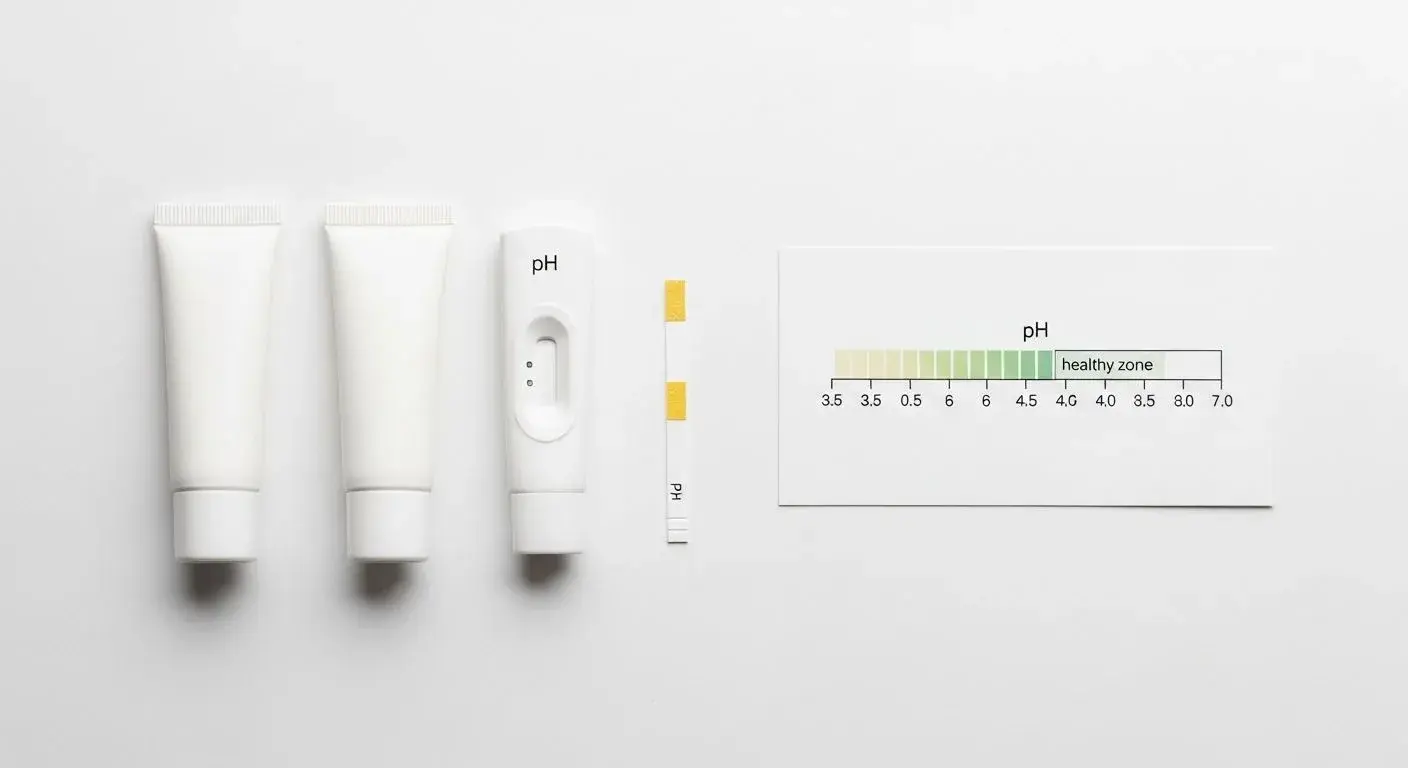
- For confirmed yeast infection: OTC clotrimazole or miconazole cream applied externally, or an internal vaginal suppository. Use only after ruling out BV — a swab test or at-home vaginal pH test strips can help distinguish the two.
- For itching across the broader skin area: A colloidal oatmeal-based cream applied to the external vulvar skin can reduce inflammation without disrupting internal flora. See our full guide on menopause itching and skin treatments for external itch coverage.
What to absolutely avoid: scented feminine washes, douches, coconut oil (disrupts pH despite popular wellness claims), and boric acid without medical supervision. Coconut oil, in particular, is widely promoted but has a pH of 7.5 — well above the vaginal optimum — and has been shown in vitro to suppress beneficial lactobacillus strains.
When Creams Are Not Enough: Escalation Options and Red Flags
OTC feminine itch products treat symptoms, not the hormonal root cause. If itching is severe, persistent beyond 2 weeks, accompanied by unusual discharge, pain during urination, or bleeding, those are signals to see a gynecologist — not to try a stronger cream. These presentations can indicate lichen sclerosus (a chronic skin condition that increases in menopause and requires topical corticosteroids, not moisturizer) or less commonly, vulvar dermatoses that warrant biopsy.
The option most women don't know exists: low-dose topical estrogen (estradiol cream, ring, or tablet) applied vaginally is the most effective evidence-based treatment for GSM-related itch. Systemic absorption is minimal, and many gynecologists consider it appropriate even for women with a history of breast cancer when symptoms are severe — though that decision requires specialist guidance. The contradiction with popular belief: 'going hormone-free' is often presented as the safe choice, but for vulvovaginal health specifically, declining treatment can lead to progressive tissue changes that become harder to reverse over time.
Start with the correct OTC product for your specific symptom profile, apply consistently, and eliminate all scented products from your routine simultaneously. If there is no improvement within 3–4 weeks, the next step is a proper diagnosis — not a different cream.