
Understanding Menopausal Hair Changes: The Hormonal Science Behind the Problem
The hair changes women experience during perimenopause and menopause are not incidental — they are a direct biological consequence of estrogen and progesterone decline. Estrogen prolongs the anagen (growth) phase of the hair cycle and supports scalp hydration. When levels fall, follicles shift prematurely into the telogen (shedding) phase, producing finer, shorter strands over successive cycles. Simultaneously, androgens — which are not balanced out by estrogen as effectively — can bind to scalp follicle receptors and miniaturise hair, a process called androgenic alopecia.
The scalp itself undergoes parallel changes. Sebum production drops, making the scalp drier and more prone to sensitivity, flaking, and itching — symptoms many women wrongly attribute to dandruff or stress. The hair shaft becomes more porous and fragile, breaking more easily at the mid-length and drying out faster after washing. Many women are shocked to find their previously oily or normal hair has become dry and coarse seemingly overnight.
It is worth understanding that these changes are not uniform. Women in early perimenopause often experience increased shedding first, while dryness and texture change tend to worsen post-menopause. A shampoo strategy that worked at 42 may be actively counterproductive at 58. For a comprehensive look at hormonal hair thinning and loss patterns across these stages, see shampoo for ageing, thinning, and hormonal hair loss.
Common Myths vs. What Actually Works for Menopausal Hair
Several deeply entrenched myths about haircare during menopause actively lead women to make things worse. Here are the most damaging — and what the evidence actually supports.
- Myth: Protein treatments fix menopausal hair damage. Reality: Over-proteinised hair becomes rigid and prone to snapping, especially when it is already fine and brittle. Protein is useful for chemically treated or heat-damaged hair, but for menopausal dryness, moisture-first formulas consistently outperform high-protein routines.
- Myth: Volume shampoos help with thinning. Reality: Most volumising shampoos are highly stripping. They create lift by removing oil and moisture, which temporarily puffs the cuticle — but on already dry menopausal hair, this accelerates breakage and makes shedding appear worse.
- Myth: Washing less frequently fixes dryness. Reality: Reducing wash frequency helps, but a dry, product-laden scalp environment can block follicles and worsen shedding over time. The actual fix is using the right shampoo at the right frequency (two to three times per week) with a scalp-safe formulation.
- Myth: Shampoo with estrogen can restore hormonal balance in the hair. Reality: Topical estrogen in over-the-counter shampoos is present in concentrations too low to have systemic or follicular hormonal effect. These products are not regulated as treatments. Any benefit observed is from the moisturising carrier ingredients, not the estrogen claim itself.
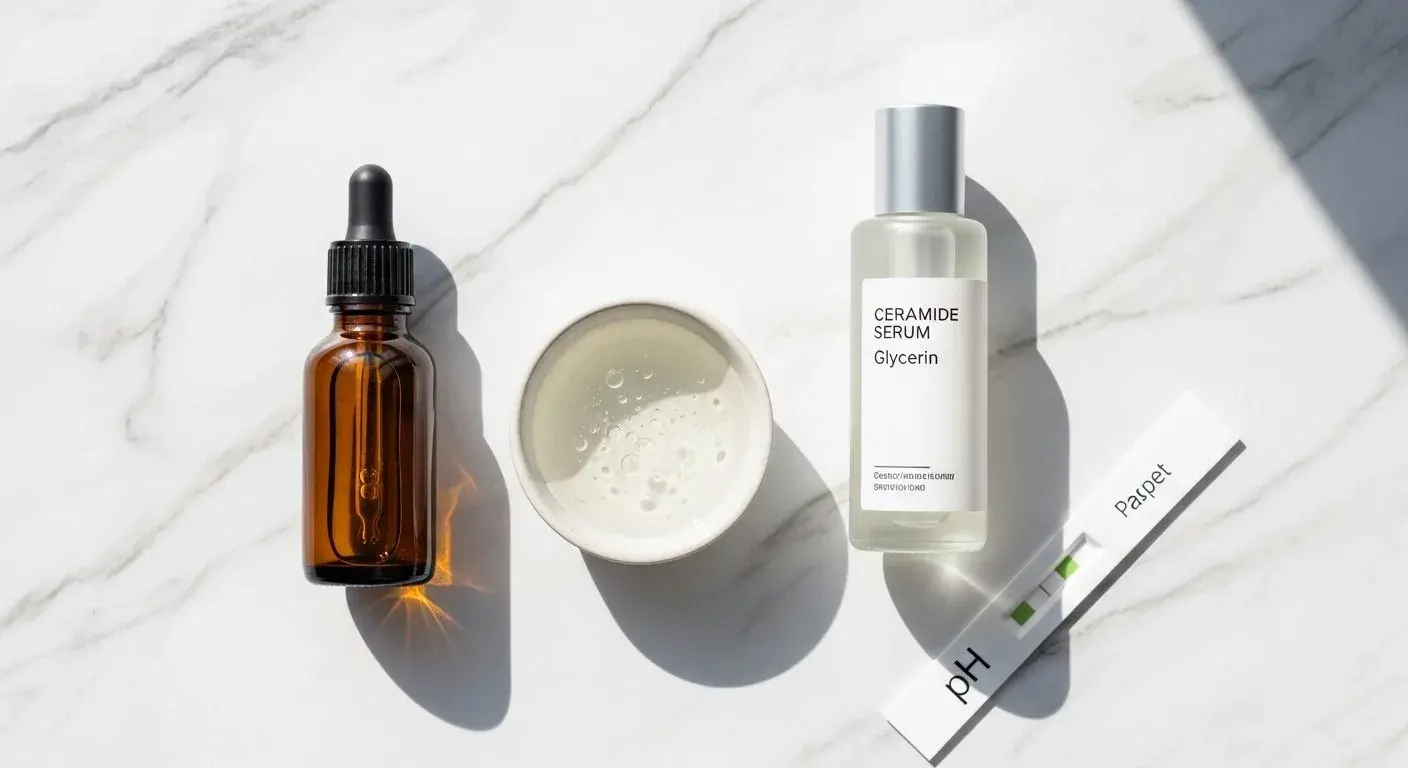
What actually works is a combination of scalp barrier restoration (through gentle surfactants and ceramide-rich formulas), moisture retention (humectants like hyaluronic acid and glycerin), and consistent follicle support (caffeine, niacinamide, or zinc pyrithione where scalp conditions warrant it). Frizzy, reactive menopausal hair additionally benefits from anti-humidity serums applied post-wash — frizz during menopause is largely a structural cuticle issue, not a styling problem.
Practical Strategies That Work Across Perimenopause and Post-Menopause
Because menopausal hair changes evolve over years, the most effective approach is stage-aware. In perimenopause, when shedding is often the dominant symptom, prioritising scalp health and follicle stimulation is most impactful. In post-menopause, when structural dryness and fragility dominate, deep moisture support becomes the priority. Treating a post-menopausal scalp with an anti-hair-loss-focused shampoo loaded with zinc and salicylic acid — designed for younger, oilier scalps — will worsen dryness and sensitivity.
The most consistent improvements come from women who adopt a simplified, targeted routine:
- Shampoo two to three times per week maximum, using a sulfate-free, pH-balanced formula (between 4.5 and 5.5).
- Apply conditioner from mid-length to ends only, leaving it on for two to three minutes before rinsing. Applying conditioner to the scalp on already oil-depleted hair tends to cause limp, flat results.
- Use a weekly scalp mask or oil treatment with jojoba or marula oil to restore sebum-like lubrication. Apply 30 minutes before washing, not as a leave-in (which can block follicles).
- Detangle before washing, not after, when hair is at its most fragile. Wet menopausal hair breaks significantly more easily than dry hair.
One edge case worth flagging: women who have recently started HRT (hormone replacement therapy) may notice a temporary increase in shedding in the first two to three months as hormonal fluctuation adjusts. This is often misattributed to haircare products. Standard advice to continue with a gentle, consistent routine holds — do not panic-switch shampoos during HRT adjustment. For guidance on how menopausal hair loss differs by pattern and stage, the article at best shampoo for older women and mature hair provides additional context.
What to Look For: Expert Buying Guide
Sulfate-Free Hydrating Shampoo
Why it helps: Falling estrogen strips the scalp of its natural oil reserve. A sulfate-free formula cleanses without further depleting the scalp, supporting the acid mantle and reducing the itch and flaking that many menopausal women mistake for dandruff.
Look for: Cocamidopropyl betaine, sodium cocoyl isethionate, or decyl glucoside as primary surfactants. Paired ingredients to prioritise: hyaluronic acid, panthenol (B5), aloe vera, ceramides, or niacinamide.
Avoid: Sodium lauryl sulfate (SLS), sodium laureth sulfate (SLES), ammonium lauryl sulfate, synthetic fragrance if the scalp is reactive, and any formula marketed as 'deep cleansing' or 'oil control.'
Conditioner for Dry, Fine, or Fragile Menopausal Hair
Why it helps: Post-menopausal hair has lifted, porous cuticles that absorb and lose moisture rapidly. A conditioning formula temporarily closes the cuticle surface, reduces static and frizz, and provides the slip needed to detangle without breakage.
Look for: Behentrimonium chloride, cetyl alcohol, argan oil, or shea butter. For very fine hair, choose lightweight spray conditioners. For coarser dry hair, a rinse-out cream formula with shea butter works well.
Avoid: High-silicone conditioners (dimethicone, cyclopentasiloxane listed high in the ingredient list) for long-term use. These provide immediate smoothness but accumulate on porous menopausal hair, eventually causing flatness and dullness.
Scalp Treatment or Serum for Hair Loss
Why it helps: Shampoo contact time with the scalp is short. A leave-on scalp serum or treatment allows active ingredients to work for hours, directly supporting follicle circulation and scalp microbiome balance.
Look for: Caffeine (clinically studied for follicle stimulation), minoxidil (if hair loss is significant — requires dermatologist guidance), zinc, rosemary oil extract, or adenosine. Apply directly to the scalp on towel-dried hair.
Avoid: Applying heavy oils directly to the scalp as a leave-in treatment. Occlusives prevent moisture loss but can also block follicles when used daily on an already-compromised scalp.
Frequently Asked Questions
What is the best shampoo for menopausal hair loss?
The best shampoo for menopausal hair loss is a gentle, sulfate-free formula containing scalp-stimulating actives such as caffeine, niacinamide, or zinc. Shampoo alone cannot reverse hormonal hair loss, but it can reduce breakage and improve the scalp environment. For moderate-to-significant shedding, a leave-on scalp serum with caffeine used daily alongside the shampoo produces better results.
Can menopause cause a dry, itchy scalp?
Yes, menopause directly causes a dry and itchy scalp. Estrogen decline reduces sebum production and disrupts the scalp's acid mantle, leaving it prone to dryness, flaking, and sensitivity. This is often misdiagnosed as dandruff, but antifungal dandruff shampoos will worsen the dryness. A ceramide-rich, pH-balanced shampoo is the correct first step.
Is it normal for hair to get frizzy during menopause?
Yes, frizzy hair is a common menopause symptom. As estrogen falls, the hair cuticle loses its smooth, flat structure and becomes porous and uneven — making it reactive to humidity. Anti-frizz serums containing dimethicone or argan oil provide temporary relief. Long-term, a low-heat styling routine and deep conditioning treatments help reduce the underlying porosity.
How is perimenopausal hair different from post-menopausal hair?
Perimenopausal hair typically sheds more — driven by hormonal fluctuation that disrupts the growth cycle. Post-menopausal hair tends to be drier, finer, and structurally more fragile due to sustained estrogen deficiency. The best shampoo and conditioner for perimenopausal hair focuses on shedding control; post-menopausal hair needs deep hydration and cuticle-smoothing ingredients above all else.
Does shampoo with estrogen actually work for menopausal hair?
No, over-the-counter shampoos marketed as containing estrogen do not meaningfully affect follicle hormones. The concentrations used are far below therapeutic levels and are not absorbed systemically from the scalp. Any benefit comes from the moisturising base ingredients. These products are not regulated as hormonal treatments.
Sources
- Female pattern hair loss: current treatment concepts. pubmed.ncbi.nlm.nih.gov — PubMed / NIH
- Estrogen and the skin and hair. pubmed.ncbi.nlm.nih.gov — PubMed / NIH
- Menopause and the skin: Basic science, general effects, and preventive care. ncbi.nlm.nih.gov — NCBI / NIH
- Hair loss: Overview and treatment options. mayoclinic.org — Mayo Clinic
- The Menopause Society recommendations on hormonal therapy. menopausesociety.org — The Menopause Society