
Why Women Are Asking This Question
It starts with noticing the skin in the mirror. Fine lines that appeared almost overnight, a loss of firmness around the jaw, and a dullness that no serum seems to fix. Then someone in a menopause forum mentions they have been dabbing a little estradiol vaginal cream on their cheeks and their skin has never looked better. Suddenly the question feels urgent: can you use vaginal estrogen cream on your face, and is it safe?
The reasoning is not without logic. Estrogen receptors exist throughout the skin, including the face. Declining estrogen during perimenopause and menopause directly reduces collagen production, skin thickness, and moisture retention. So replenishing estrogen topically seems intuitive. But prescription estradiol creams — including vaginal formulations like Estrace or compounded versions — are not the same as cosmetic moisturizers with phytoestrogens, and applying them to your face carries real considerations that most online discussions skip.
Estradiol vaginal creams are formulated for mucosal tissue absorption, meaning they are designed to be absorbed efficiently and rapidly into the bloodstream. Facial skin, while thinner than body skin, is not equivalent to vaginal mucosa — but it is still highly vascular and well-perfused. Off-label application to the face is not studied in controlled trials, which means dosing, safety, and long-term effects are genuinely unknown. Women who do this are effectively self-experimenting with a prescription hormone.
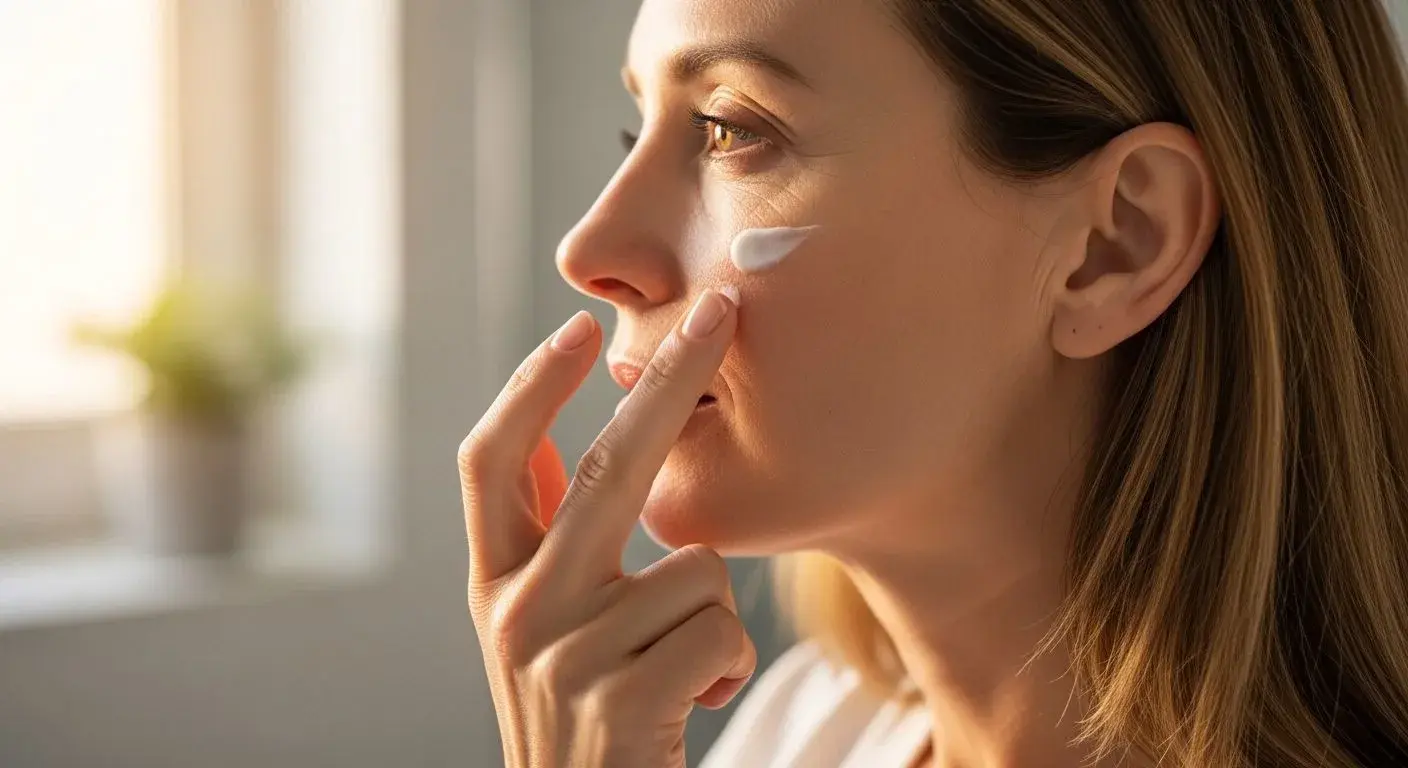
Where to Apply Estrogen Cream — and What Happens When You Use It on Your Face
Prescription estradiol creams are typically prescribed for vaginal atrophy, and the labeled application site matters for a reason. Vaginal tissue absorbs estradiol at a controlled, localized rate. When applied to the face — an area with dense capillary networks, thinner stratum corneum in many peri and postmenopausal women, and constant exposure to environmental changes — absorption rates are unpredictable.
The main risks of off-label facial use include: systemic absorption leading to elevated estradiol blood levels (which matters if you are not already on HRT), uneven hormone delivery without clinical oversight, and potential skin reactions including redness, milia, or paradoxical sensitivity. For women already on systemic HRT (patches, pills, or rings), adding facial estradiol cream without physician guidance risks pushing total estradiol exposure beyond therapeutic ranges.
- Estradiol testosterone cream: Some compounded creams combine estradiol with testosterone for libido and tissue support. These are even less studied for facial use and carry additional androgenic effects (think increased facial hair or acne if misused).
- Estro Life and similar OTC estrogen creams: These typically contain phytoestrogens (plant-based estrogen-like compounds) rather than pharmaceutical estradiol. They sit in a different risk category — lower potency, not prescription-regulated, but also less evidence-backed for skin improvement.
- Moisturizer with estrogen: Cosmetic products marketed as containing estrogen almost always use phytoestrogen derivatives. They fall under cosmetic regulation, not pharmaceutical, so claims are limited but so are risks.
If you are curious about estrogen-focused skincare, the safer starting point is a purpose-formulated product rather than repurposing a vaginal prescription. See our guide to skin cream for menopause for options that are designed with facial skin in mind.
What Actually Works for Estrogen-Depleted Skin — and Common Misconceptions
The biggest misconception is that more estrogen applied topically always means better skin outcomes. Evidence from HRT studies shows that systemic estrogen does improve skin thickness, hydration, and collagen density — but topical facial application of prescription estradiol is not the same as systemic HRT. Without consistent dosing, you may get erratic results: some days overexposed, others underexposed, with no measurable benefit over a well-formulated retinol-based or peptide-based cream.
A second common misconception is that natural estrogen cream for menopause (phytoestrogen-based OTC products) is essentially ineffective. Some soy isoflavone and red clover formulations do show modest improvements in skin hydration and elasticity in small studies, particularly when used consistently over 12 or more weeks. They will not replicate pharmaceutical estradiol, but they are a legitimate option for women who want topical support without prescription risk.
The case where standard advice fails is for women on tamoxifen or with hormone-sensitive cancers. For this group, even phytoestrogen creams on the face are not automatically safe, and any estrogen-adjacent product — topical or otherwise — requires oncologist input. This is a population that menopause skincare content routinely ignores.
For most women navigating menopause skin changes, the most evidence-supported facial approach combines systemic HRT (if appropriate and prescribed), a barrier-supportive moisturizer, and actives like retinoids or peptides that upregulate collagen independently of estrogen. Explore our roundup of the best menopause face cream and skincare options to find products that address the actual mechanisms of menopausal skin aging without the clinical risks of off-label prescription use.