
How DHT Affects Female Hair Follicles — and Why Menopause Amplifies the Problem
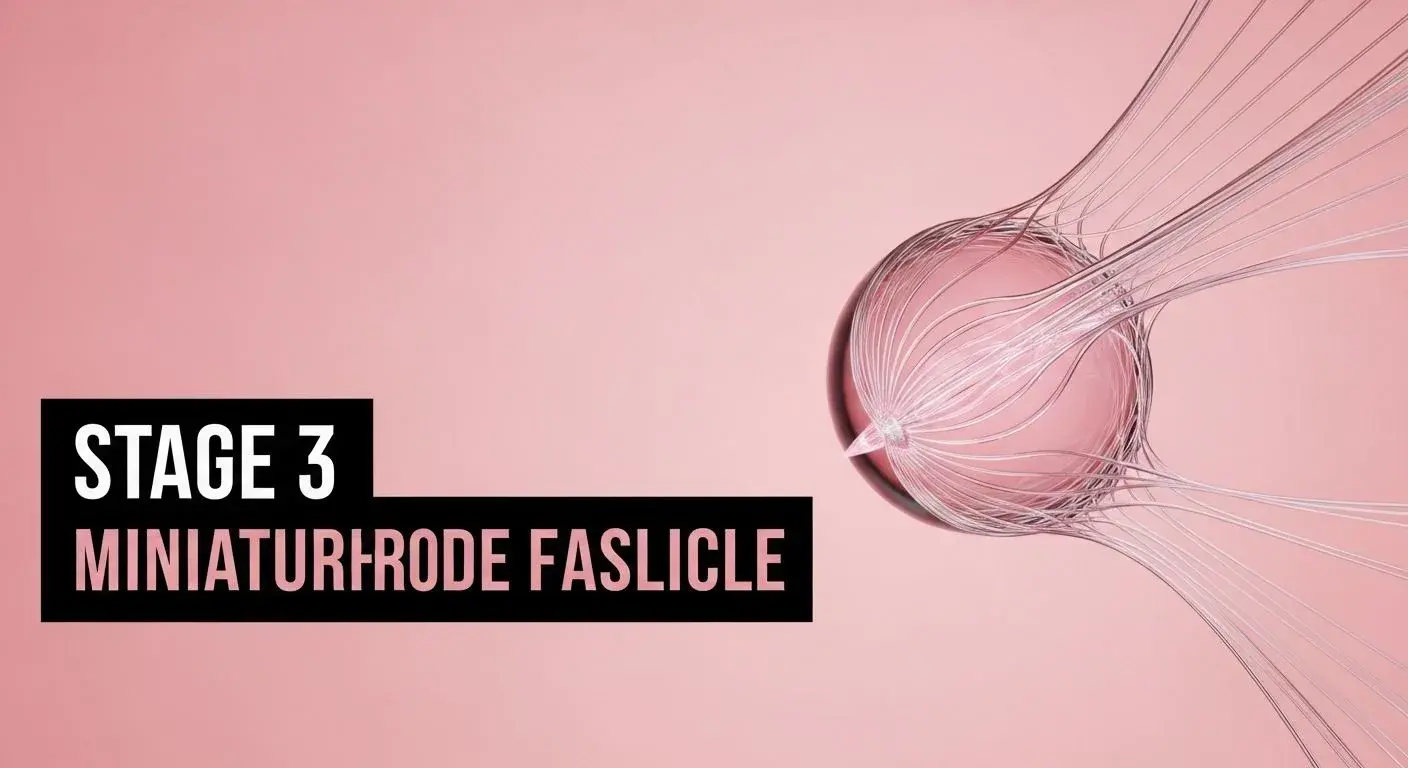
DHT (dihydrotestosterone) is a potent androgen derived from testosterone via the enzyme 5-alpha reductase. In follicles that are genetically sensitive to it, DHT binds to androgen receptors and progressively shrinks the follicle — a process called miniaturisation. Each growth cycle produces a thinner, shorter, lighter hair until eventually the follicle stops producing visible strands altogether.
In pre-menopausal women, oestrogen counterbalances DHT's effect. It upregulates aromatase activity — which converts some testosterone to oestradiol — and prolongs the anagen (growth) phase, partially protecting sensitive follicles. When oestrogen declines sharply at menopause, this protective buffer disappears. Androgen levels do not necessarily rise, but their relative influence on follicles increases significantly because the counterweight is gone.
This is why many women notice the onset of female pattern hair loss — thinning at the crown and widening part line — specifically around perimenopause, even if their testosterone is within normal range. The pattern looks different from male DHT-driven loss (which often begins at the hairline) but the underlying follicle mechanism is the same. Scalp sensitivity to this hormonal shift can also manifest as skin and scalp changes; greasy and oily skin during menopause and perimenopause explains how the same androgen shift alters sebaceous gland activity alongside follicle behaviour.
Two Misconceptions About DHT in Women — and What the Evidence Shows Instead
Misconception 1: 'DHT-related hair loss only affects men.' Women have androgen receptors in scalp follicles — the density varies between individuals, which is why some women experience significant DHT-driven loss and others do not. Genetics determines follicle receptor sensitivity, which is why female pattern hair loss runs in families and worsens predictably at menopause.
Misconception 2: 'If your androgens test normal, DHT is not your problem.' Standard blood tests measure total and free testosterone — they do not measure DHT at the follicle level or follicle receptor sensitivity. A woman can have 'normal' testosterone yet still experience significant DHT-driven miniaturisation if her follicles are genetically predisposed to react strongly to it.
The most evidence-backed treatment targeting DHT in women is topical minoxidil, which works independently of DHT but counteracts miniaturisation by extending the growth phase. Oral finasteride — a 5-alpha reductase inhibitor that directly blocks DHT production — is used off-label in post-menopausal women in some clinical settings, but it carries risks and is not suitable for women who could become pregnant. Spironolactone, an anti-androgen, is another off-label option increasingly used by dermatologists for this pattern of loss.
Practical Steps: How to Reduce DHT's Impact on Your Hair
A meaningful reduction in DHT activity at the follicle is achievable — though the trade-off is that most interventions require consistent, long-term use. Here is where the evidence points:
- Saw palmetto (topical or oral): A natural 5-alpha reductase inhibitor with emerging evidence in female hair loss. Effects are mild but meaningful for some women, and it has a low side-effect profile compared to pharmaceutical alternatives.
- Ketoconazole shampoo (2%): Has demonstrated anti-androgenic effects at the scalp when used regularly. It also addresses any fungal component that can worsen inflammation around the follicle, making it doubly useful.
- Hormone therapy (HRT): By restoring oestrogen, HRT reintroduces some of the natural counterbalance to DHT. It does not block DHT directly but changes the hormonal ratio that made follicles vulnerable in the first place.
One scenario where standard advice falls short: women with polycystic ovary syndrome (PCOS) entering menopause. Their pre-existing androgen excess means DHT-driven loss can be more severe and less responsive to single-ingredient approaches. A dermatologist or endocrinologist input is particularly important in this group.
Scalp health also plays a supporting role. Chronic scalp inflammation — whether from sensitivity, product reactions, or dryness — can amplify DHT's miniaturising effect by compromising the follicle microenvironment. Keeping the scalp barrier healthy is not a substitute for addressing DHT but it creates better conditions for any treatment to work. menopause itchy scalp: causes and relief strategies outlines how to manage scalp inflammation that may be compounding follicle stress. Always discuss pharmaceutical options with your GP or a trichologist before starting treatment.