
Why Your Eye Makeup Suddenly Stops Working After 40
The frustration isn't imaginary—eyelid skin changes dramatically during perimenopause in ways that make previous makeup techniques fail completely. Collagen loss around the eyes occurs faster than anywhere else on the face, with studies showing up to 30% reduction in the first five years of hormonal transition. This creates three simultaneous problems: eyelids become looser and more hooded, the thin skin develops crepey texture, and oil production decreases causing eyeshadow to skip and crease within hours rather than lasting all day.
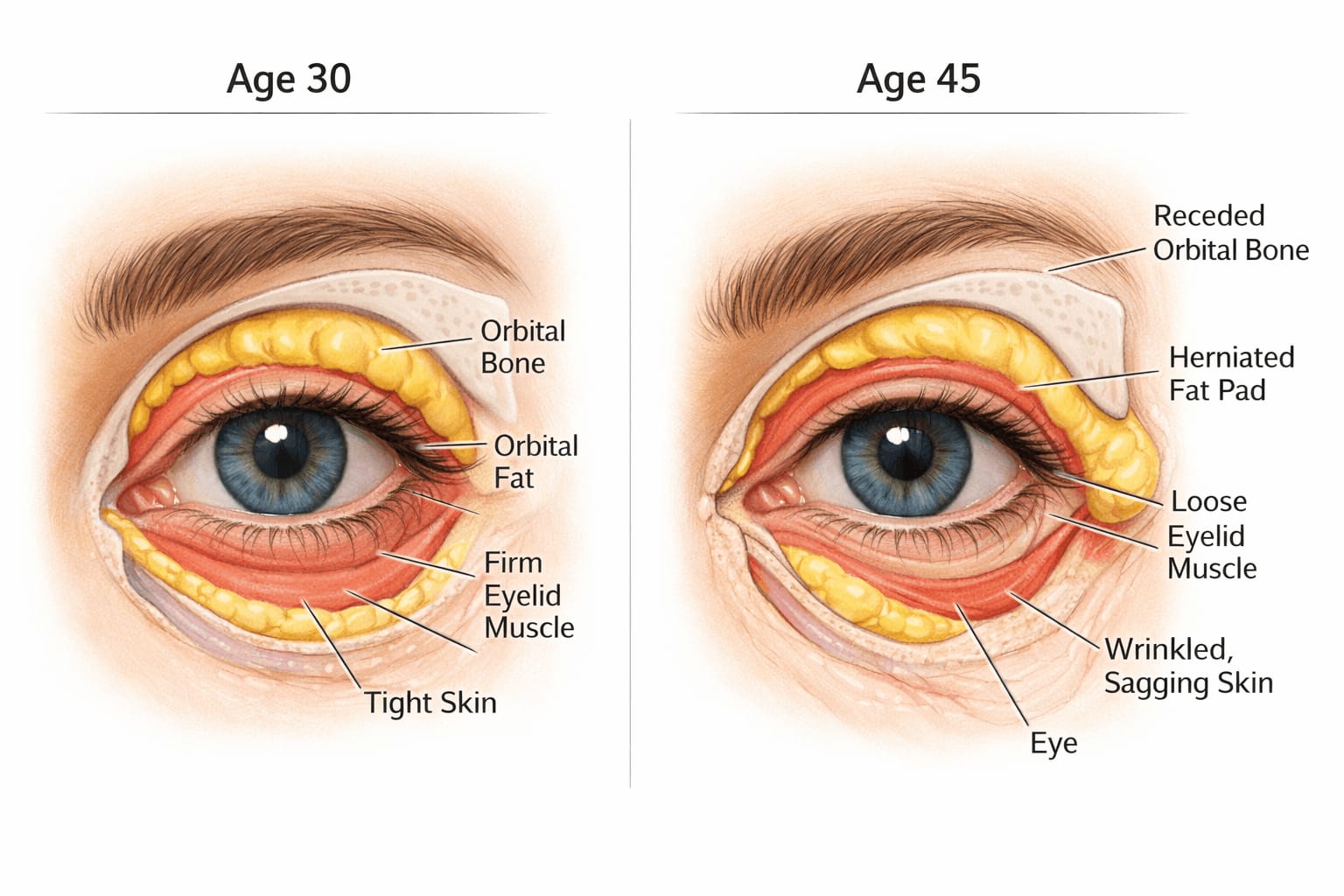
What many women don't realize is that eyelid hooding isn't just about excess skin—it's about fat pad migration and bone structure changes that alter your entire eye shape. The eyeshadow techniques you used at 30 placed color based on a different eye architecture. When you apply the same placement at 45, the color disappears into the hood or sits in the wrong position relative to your new bone structure. This is why that smoky eye that looked sultry before now looks muddy or makes eyes appear smaller and more tired.
Additionally, the skin's ability to hold pigment changes with declining estrogen. Eyeshadow that used to blend smoothly now catches on dry patches, and formulas that stayed put for 8 hours start creasing in the lid fold within 2-3 hours. Eyeliner that glided on effortlessly now drags and skips across crepey skin, creating uneven lines. These aren't product failures—they're fundamental compatibility issues between unchanged formulas and transformed skin. Understanding this distinction is critical because the solution isn't buying more expensive versions of the same products; it's completely changing your approach to eye makeup application and product selection. Explore comprehensive techniques in our detailed eye makeup guide for women over 40.
Common Myths About Eye Makeup After 40
Myth: Avoid Dark Eyeshadow Because It's Aging
The blanket advice to stick with light, neutral shadows after 40 is one of the most limiting misconceptions in mature beauty. Dark eyeshadow isn't inherently aging—poor placement of dark shadow is what creates problems. When dark color is applied into the hood or too close to the lash line on hooded eyes, it disappears or creates a heavy, drooping effect. However, dark shadow placed correctly in the outer V and blended upward and outward actually lifts the eye and creates dimension that counteracts sagging.
What works is strategic dark placement with extended blending: apply deeper shades with your eyes open, focusing color above the natural crease where it remains visible. Blend extensively outward toward the temple and upward toward the brow bone. This creates lift and definition without the muddy, sunken look that happens when dark colors are trapped under the hood. Women who abandon all dramatic eye makeup after 40 often report feeling invisible or less like themselves—there's no need for that sacrifice when placement adjustment solves the problem.
Myth: Primer Prevents All Creasing on Mature Lids
Eye primer is marketed as the solution to creasing, but on significantly hooded or crepey lids, even the best primers fail within hours. The issue is mechanical: when excess skin folds over itself repeatedly through facial expressions, any product in that fold will eventually bunch and crease regardless of primer. Additionally, many primers designed for oily young lids are too mattifying for dry perimenopausal skin, actually causing eyeshadow to skip and appear patchy rather than providing a smooth base.
The realistic approach combines multiple strategies: use a hydrating eye primer or even just concealer as a base, choose cream eyeshadows for the lid area that move with skin rather than cracking, and accept that touch-ups may be necessary after 6-8 hours. For special occasions, some women use eyelid tape to temporarily minimize hooding before makeup application, which eliminates the fold that causes creasing. This is the honest trade-off—perfect, crease-free eyeshadow all day on significantly hooded mature lids isn't achievable for most women without structural intervention, and that's okay. Adjusted expectations and touch-up strategies work better than chasing an impossible standard.
Myth: Minimal Makeup Is Always Better After 40
The cultural push toward 'natural' or 'minimal' eye makeup for women over 40 often comes from the belief that visible makeup looks try-hard or aging. But the contradiction is that minimal makeup on undefined, hooded eyes can actually make you appear more tired or washed out than well-executed definition would. Bare or barely-there eyes on mature faces lack the structure and pop that defined brows, liner, and strategic shadow provide, especially in low-contrast lighting like offices or restaurants.
What beginners misunderstand is that 'natural eye makeup for 40 year olds' doesn't mean barely any makeup—it means makeup that enhances your features while looking effortless and age-appropriate. This typically involves more technique than minimal application: well-blended transition shades, tightlining to define without obvious liner, strategic highlighting on the inner corner and brow bone, and volumizing mascara. The result looks natural but requires skill and product. Experienced practitioners know that truly minimal makeup works only if you have naturally defined features and good skin contrast—most women over 40 benefit from thoughtful, strategic application even for 'natural' looks.
Practical Techniques That Actually Work for 40+ Eyes
The Eyes-Open Application Method for Hooded Lids
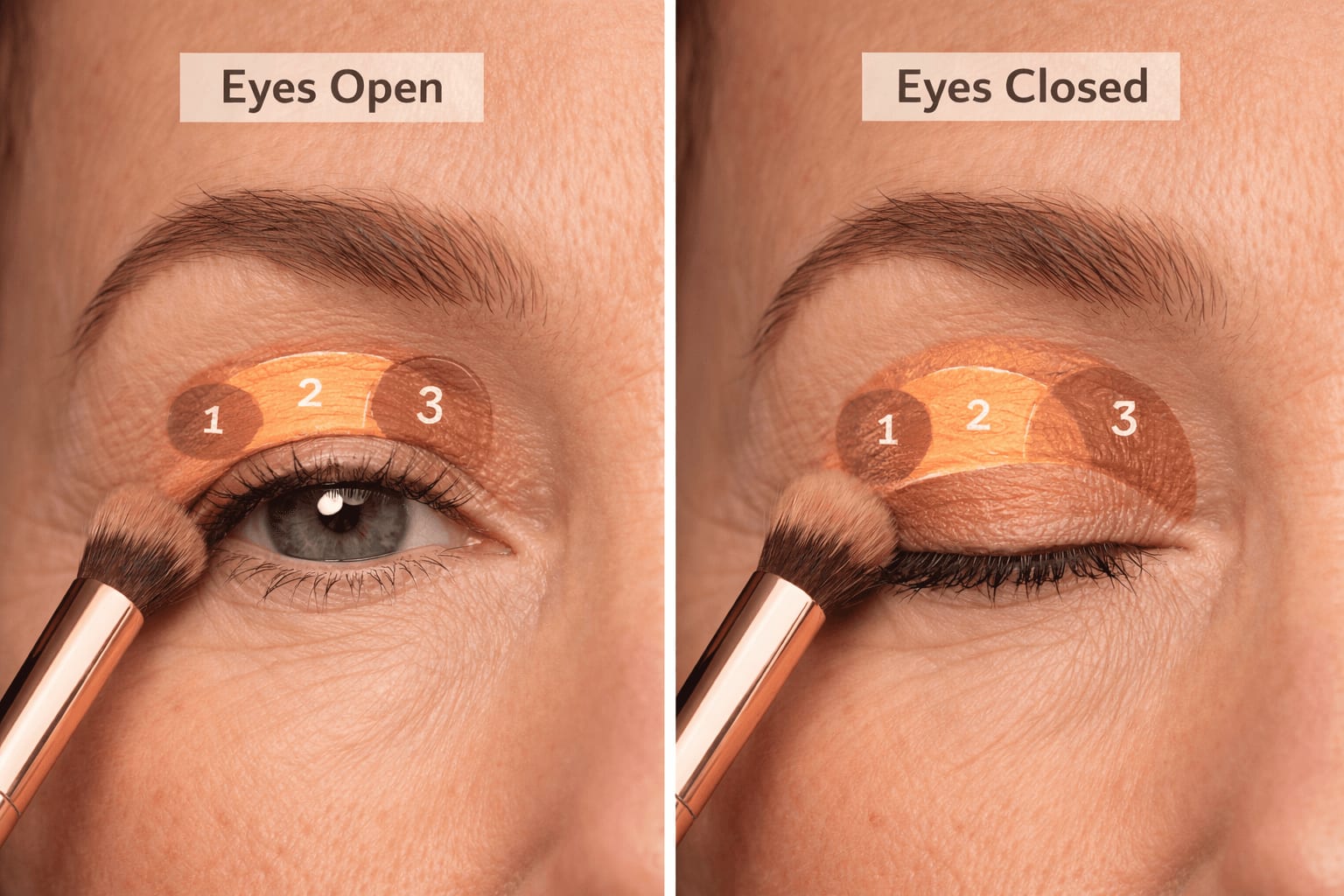
The single most transformative technique for eye makeup after 40 is applying transition and crease colors with eyes open rather than closed. When eyes are closed, you're applying to anatomy that doesn't exist when eyes are open—the hood covers everything. Instead, look straight into a mirror at eye level and apply your transition shade starting just above where your natural crease has become hidden by the hood. Blend upward toward the brow bone, focusing on creating a gradient that's visible with your eyes in their natural position.
For deeper crease colors, place them in an extended C-shape starting at the outer corner and sweeping upward and inward—always with eyes open so you can see where color actually lands. This creates the illusion of a defined socket even when the natural crease is hidden. The darker shade should never go below your actual crease when eyes are open, or it disappears entirely. This takes practice because it contradicts every tutorial designed for non-hooded eyes, but once mastered, it's the difference between invisible makeup and eyes that look defined and lifted. Check our recommended products for women in their 40s for formulas that work with this technique.
Cream-to-Powder Strategy for Crepey Lids
Powder eyeshadows applied directly to dry, crepey lids emphasize every line and settle into texture within hours. The solution is layering cream and powder strategically: apply cream eyeshadow as your base on the mobile lid only, using fingertips to press it into skin. Cream formulas contain emollients that smooth over crepey texture and provide lasting color without emphasizing lines. Then use powder shadows only in areas without significant texture—the crease area above the hood, outer V, and brow bone.
This hybrid approach gives you the longevity and blendability of powder where you need dimension, plus the smooth, crease-resistant coverage of cream where texture is an issue. For minimal looks, cream shadow alone on the lid with well-blended edges and mascara creates polish without complexity. For glam looks, the cream base prevents powder from settling badly while still allowing intricate blending. The trade-off is slightly more effort and product investment, but the payoff is eye makeup that actually looks good 6-8 hours later rather than disintegrating within two hours.
When Standard Techniques Fail: The Lash Line Focus Alternative
For women with severely hooded eyes where almost all lid space disappears when eyes are open, traditional eyeshadow placement becomes nearly pointless. In these cases, shifting focus entirely to lash definition and brow framing creates more impact than fighting with invisible eyeshadow. Tightlining the upper waterline, using a thin line of gel liner right at the lash roots, and applying volumizing mascara creates definition without requiring visible lid space. Well-groomed, filled brows frame the eyes and lift the entire eye area.
Add a small amount of light shimmer or matte highlight in the inner corner and just under the arch of the brow to brighten and lift. This minimal approach often looks more polished and youthful than elaborate eyeshadow that disappears into hooding. It's honest to acknowledge that not every eye makeup trend or technique translates to every eye shape after 40—sometimes the winning strategy is embracing what works for your specific anatomy rather than forcing techniques designed for different features. The goal is eyes that look awake, defined, and intentional, not perfectly matching a tutorial created for entirely different eye structures.