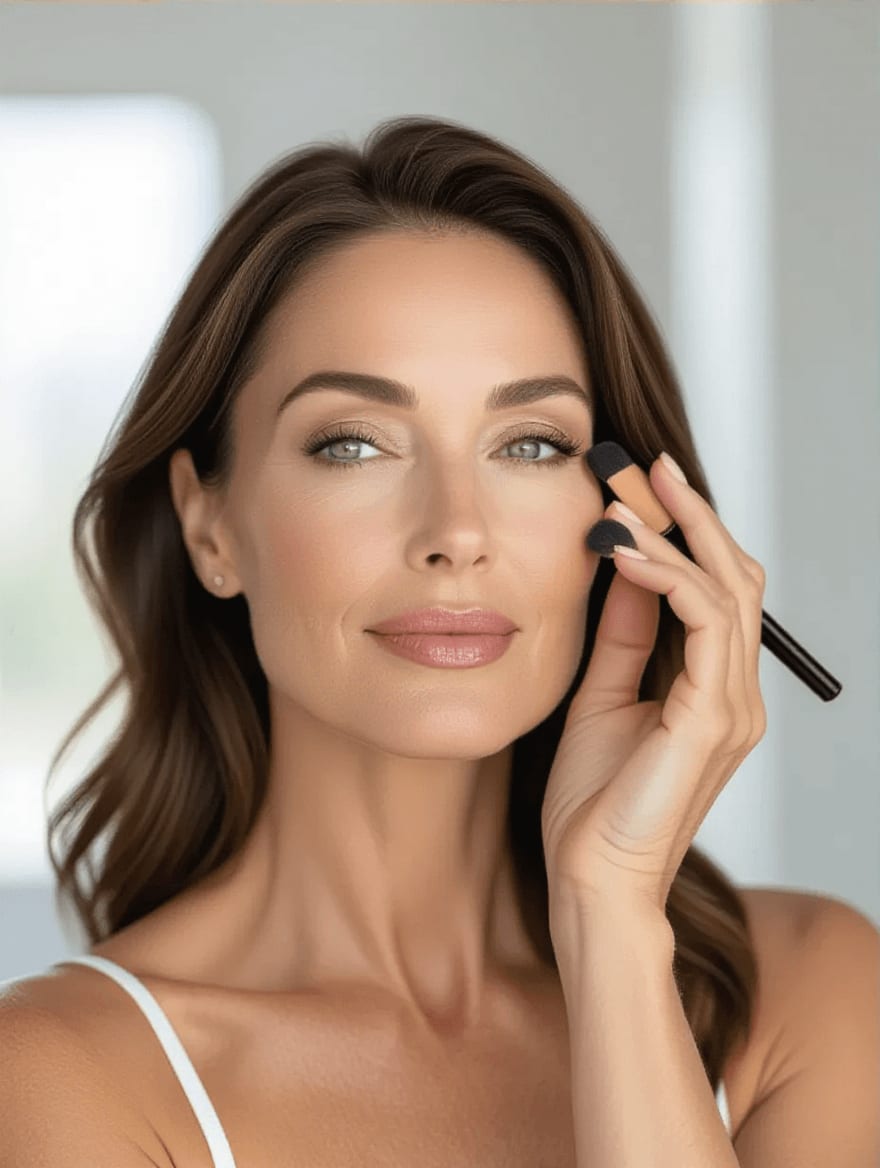
Why Your Old Eye Makeup Techniques Stop Working After 40
Most women over 40 notice their eye makeup suddenly looks different—colors disappear into creases, eyelids appear heavier, and techniques that worked beautifully in their 30s now emphasize texture rather than enhance features. This isn't about losing skill; it's about anatomical changes that require different approaches. Estrogen decline reduces collagen production by up to 30% in the first five years of menopause, causing skin around the eyes to lose elasticity and develop a crepey texture that affects how makeup sits and moves throughout the day.
The eyelid also undergoes structural repositioning as fat pads shift and skin loosens, creating what appears as hooding even if you never had it before. This changes where shadow is visible—what once showed beautifully in your crease now hides completely when your eyes are open. Simultaneously, the brow bone becomes more prominent while the mobile lid shrinks, fundamentally altering the canvas you're working with. Understanding these changes explains why your favorite smoky eye now looks muddy or why winged liner suddenly appears crooked.
The key insight most makeup tutorials miss: you're not applying makeup incorrectly—you're applying outdated techniques to changed anatomy. Once you adjust your approach to work with these changes rather than fight them, eye makeup becomes easier and more flattering than ever. Learn comprehensive strategies in our guide to eye makeup for women over 40.
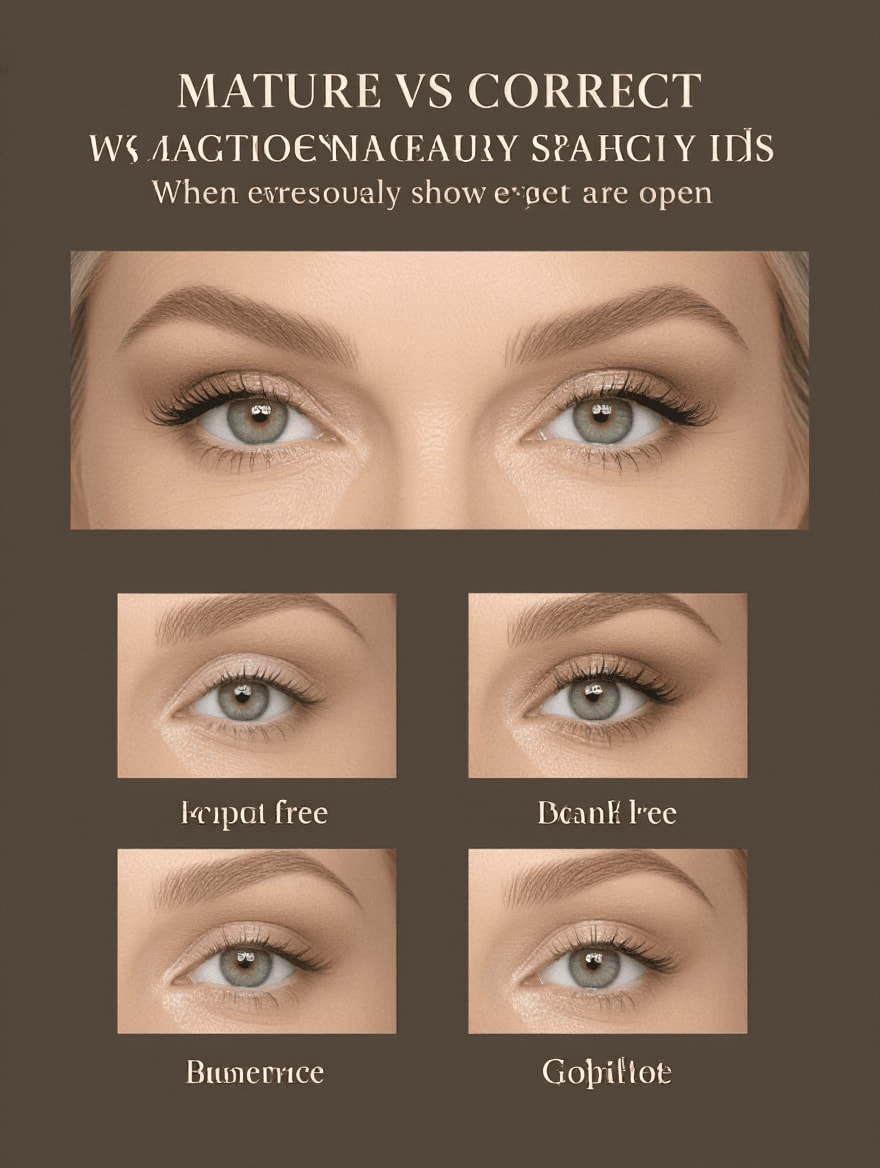
Common Myths vs. What Actually Works for Eyes Over 40
Myth 1: Avoid Dark Colors to Look Younger
The advice to stick with light, neutral shades actually ages most women further by washing out natural depth and creating a flat, lifeless appearance. The real issue isn't darkness—it's placement and finish. Dark matte shadows packed onto crepey lids emphasize texture, but the same deep shades applied with a light hand in strategic locations (outer V, lash line) create essential definition that counteracts the flattening effect of volume loss. Women who maintain contrast through thoughtful use of deeper tones consistently appear more vibrant than those using only pastels.
Myth 2: Always Use Primer to Prevent Creasing
Eye primer is often blamed when shadow still creases, but the real culprit is typically application thickness. Mature lids have more natural folds and movement, so heavy primer layers actually create more surface for makeup to settle into. The counterintuitive solution: use less product overall. A translucent powder dusted on bare lids often outperforms primer by creating a dry surface that grips pigment without bulk. When primer is needed, the thinnest possible layer—barely enough to feel—prevents the creasing that comes from too much product moving in natural lid grooves throughout the day.
The Overlooked Reality: Application Method Matters More Than Products
Most makeup advice focuses obsessively on which products to buy, but the decisive factor for eyes over 40 is how you apply them. The same eyeshadow applied with patting motions versus sweeping creates entirely different results on mature skin—patting deposits pigment on the surface where it's visible, while sweeping drags it into fine lines where it disappears or emphasizes texture. Similarly, applying makeup with eyes open versus closed determines whether color lands where you intend it or vanishes into hidden folds. This explains why two women using identical products achieve wildly different results.
Practical Techniques That Work With Mature Eyes
The "Eyes-Open" Placement Method
The single most transformative technique for hooded or mature lids is applying and checking shadow placement with eyes fully open, looking straight ahead into a mirror. When you close your eyes to apply shadow in the traditional crease location, that entire area often disappears under the hood when you open them. Instead, identify your visible crease—the actual fold line you see with eyes open—and place your transition shade slightly above this line. This seems counterintuitively high when eyes are closed, but it's the only placement that remains visible during conversation, photos, and daily life. Women who master this single adjustment report finally understanding where their eyeshadow actually "goes."
The Cream-Then-Powder Strategy
For minimal makeup that actually lasts, apply a cream shadow base in a neutral tone, then set only strategic areas with powder shadow. The cream provides a smooth, forgiving base that fills fine lines without settling into them, while the powder adds dimension only where needed—typically the outer corner and along the lash line. This hybrid approach gives you the ease of cream with the definition and longevity of powder, and uses significantly less product than either alone. It's particularly effective for natural looks because cream shadow buffs out seamlessly, eliminating the harsh edges that make minimal makeup look amateurish.
- For deeper-set eyes: Focus lighter shades on the center lid and inner corner to bring eyes forward, using darker shades sparingly only at the outer corner
- For prominent eyes: Apply deeper matte shades across the entire mobile lid to create the illusion of depth, keeping shimmer only on the brow bone
- For downturned eyes: Concentrate color and definition on the outer third, extending slightly upward to create lift without obvious wings
When Standard Techniques Fail: Asymmetry and Individual Variation
The most common scenario where typical eye makeup advice fails is asymmetrical aging—when one eyelid develops more hooding or crepiness than the other. Applying the same technique to both eyes makes asymmetry more obvious rather than less. The solution requires treating each eye according to its individual needs: the more hooded eye needs higher shadow placement and often benefits from slightly more definition to compensate for lost depth, while the less affected eye can follow more standard placement. This approach feels wrong initially because you're deliberately applying makeup differently, but the visual result appears more balanced. Similarly, some women find their eyes respond opposite to general advice—shimmer might emphasize texture on dry lids but actually camouflage it on oilier ones. Discover product recommendations in our guide to best makeup for women in their 40s.