
Why Hair Thins in Your 20s: It's Not Just Stress
If you're noticing thinning edges, a wider part, or more hair in your brush than usual, you're not imagining it. Hair loss in your 20s is more common than most people admit, and it's rarely caused by just one thing. The most frequent culprit is hormonal fluctuation — specifically shifts in androgens (like DHT) that shrink hair follicles over time, a process called androgenetic alopecia. But in your 20s, hormones rarely act alone.
Other common triggers include iron-deficiency anemia (especially in women with heavy periods), thyroid dysfunction, rapid weight loss, and chronic caloric restriction. Oral contraceptives can also cause a shedding phase when started or stopped, and many women don't connect the timing. What looks like a stress response is often a delayed physiological reaction to something that happened two to four months earlier.
Thinning edges specifically, particularly around the temples and hairline, often signal traction alopecia — damage from repeated tension caused by tight ponytails, buns, braids, or weaves. Unlike hormonal hair loss, traction alopecia is mechanical. The follicles are physically stressed rather than hormonally suppressed. The distinction matters because the treatment approach is completely different. If the cause is tension, no supplement will reverse it until the tension stops.
- Androgenetic alopecia: Genetically driven follicle miniaturization, can begin in the early 20s.
- Telogen effluvium: Diffuse shedding triggered by illness, crash diets, surgery, or hormonal shifts — typically temporary.
- Traction alopecia: Hairline damage from mechanical tension. Common in women who regularly wear tight styles.
- Nutritional deficiency: Low iron, ferritin, zinc, or B12 disrupts the hair growth cycle without obvious symptoms elsewhere.
What People Get Wrong About Young Female Hair Loss
The most persistent misconception is that hair loss only becomes a concern during perimenopause or menopause. In reality, hormonal hair thinning can start as early as the late teens, and the early 20s are a common window — especially in women with a family history. Waiting until your 30s or 40s to investigate means losing years of intervention time when follicles are still viable.
A second common error: treating hair loss with biotin supplements before identifying the root cause. Biotin only helps if you have a biotin deficiency, which is actually rare. Most women with hair loss in their 20s are deficient in ferritin (stored iron), not biotin. A ferritin level below 70 ng/mL is associated with hair loss even when standard hemoglobin levels appear normal — yet most GPs only flag iron deficiency when hemoglobin drops, missing the subclinical range where hair suffers first.
There's also a widespread belief that edge thinning in women with natural or textured hair is 'just genetics.' While genetics play a role in follicle sensitivity, receding edges are frequently a sign of avoidable traction damage. Many women are surprised to learn their hairline can partially recover once tension-based styles are reduced — but only if the follicles haven't been permanently scarred. Time matters here. Hormonal changes during the reproductive years — including those related to early perimenopause — can accelerate scalp sensitivity, as explored in the connection between scalp inflammation and hormonal shifts.
What Actually Helps — and When Standard Advice Falls Short
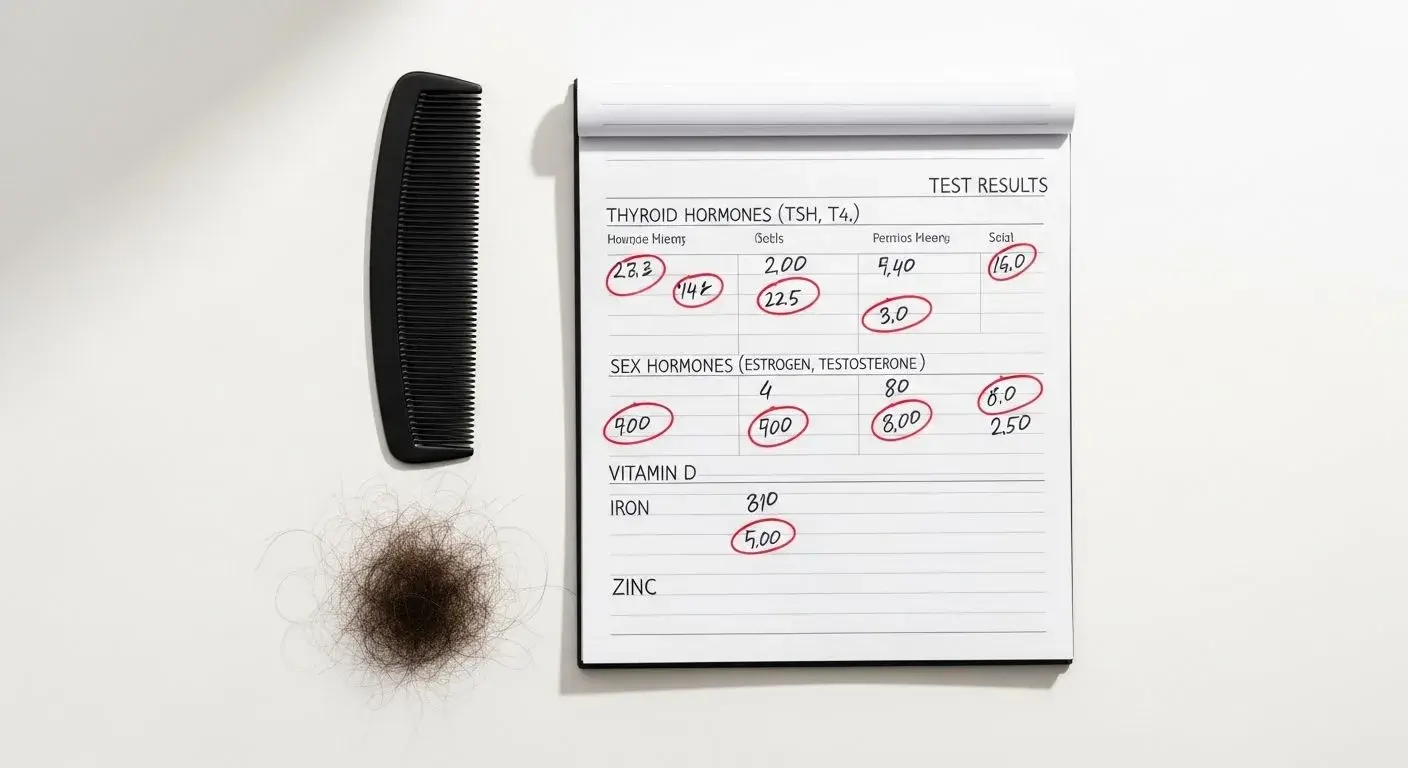
The first step before any treatment is a targeted blood panel: ferritin, TSH (thyroid), free T3, DHEA-S, and total testosterone. Without this baseline, you're guessing. If ferritin is low, supplementing iron — alongside vitamin C for absorption — can produce visible regrowth within three to six months. If androgens are elevated, a dermatologist may discuss topical minoxidil or anti-androgen options like spironolactone.
For traction alopecia, the intervention is lifestyle, not pharmaceutical. Alternating hairstyles, reducing tension, using protective styles that don't pull the hairline, and applying scalp-stimulating oils (like rosemary or peppermint diluted in a carrier) can support recovery — but only if scarring hasn't occurred. Once follicles are scarred, they can't be reactivated.
Where standard advice fails: women who address one cause but have two overlapping ones. For example, correcting iron deficiency while continuing tight hairstyles, or stopping the pill without addressing the androgenetic pattern that the pill was masking. Hair recovery is slow — expect a minimum of six months before judging whether an intervention is working. Hormonal skin changes, like those covered in hormonal effects on skin oiliness and scalp balance, can also compound scalp conditions that accelerate shedding — so treating the scalp environment matters alongside treating the follicle directly.