
Why Hair Loss Accelerates Over 40: The Hormonal Cascade
Most women expect menopause to affect their skin or mood. Few expect to watch handfuls of hair disappear down the shower drain. Yet hair loss over 40 is one of the most common and least-discussed hormonal shifts women experience, and it is rarely caused by a single hormone.
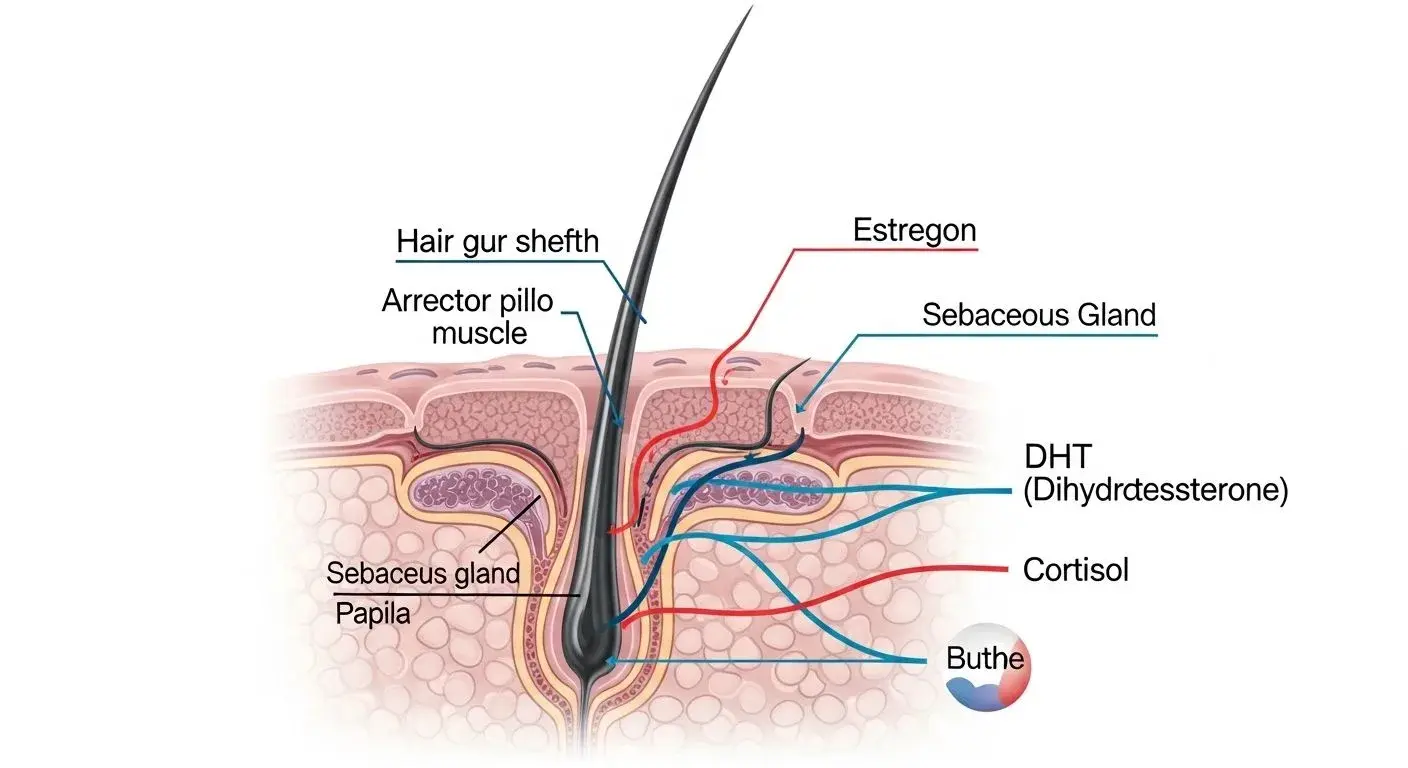
Estrogen: During your reproductive years, estrogen prolongs the anagen (growth) phase of your hair cycle. As estrogen declines in perimenopause, hair cycles shorten, meaning more follicles rest simultaneously. You do not lose follicles, but a greater percentage of them are dormant at any given time, which reads as visible thinning.
DHT (dihydrotestosterone): This is the hormone most women are never told about. As estrogen falls, the ratio of androgens to estrogen shifts. DHT, a potent derivative of testosterone, binds to receptors in scalp follicles and physically miniaturizes them over time. This is the same mechanism behind male-pattern baldness, and it affects a significant proportion of women over 40 at the temples and crown.
Cortisol and thyroid hormones: Chronic stress elevates cortisol, which disrupts the hair cycle and can trigger telogen effluvium, a condition where large numbers of hairs enter the resting phase simultaneously. Thyroid dysfunction, which becomes more common after 40, produces near-identical shedding patterns. This is why dermatologists typically order both a hormone panel and a thyroid panel before diagnosing the cause. If your thyroid is the driver, treating only estrogen will not stop the loss.
Understanding which hormones are in play for your specific pattern is the first step. Diffuse thinning across the whole scalp typically points to thyroid or cortisol. Widening part and crown thinning usually signals DHT. Sudden post-illness or post-surgery shedding is almost always telogen effluvium driven by cortisol. For more on how these same hormones affect your complexion, see how hormonal changes affect your skin during menopause.
Two Myths That Keep Women From Getting Real Help
Misconceptions about hormonal hair loss cause women to either panic unnecessarily or undertreat a reversible condition. Here are the two most common ones.
- Myth 1 - 'Hair loss is permanent once it starts.' False for most hormonal causes. Follicle miniaturization from DHT can be slowed or partially reversed when treated early with topical minoxidil or anti-androgen therapies. Telogen effluvium almost always resolves fully once the trigger (stress, illness, crash dieting, thyroid imbalance) is corrected. The window matters, however: waiting more than 12-18 months after onset reduces how much regrowth is achievable.
- Myth 2 - 'Estrogen therapy will fix my hair.' Sometimes, but not reliably. HRT may help if estrogen loss is the primary driver and you start early. However, if DHT sensitivity is the main cause, estrogen alone does not address the androgen pathway. Some forms of progesterone used in HRT (specifically synthetic progestins) are themselves mildly androgenic and can worsen DHT-related thinning. If you are on HRT and still losing hair, this is worth discussing with your prescribing doctor.
Edge case worth knowing: Women with polycystic ovary syndrome (PCOS) who enter perimenopause often experience compounded hair loss, because their androgen levels were already elevated before estrogen began declining. Standard perimenopause advice is frequently insufficient for this group, and a dermatologist or endocrinologist familiar with both conditions is warranted.
What Actually Helps: Treatment Approaches Ranked by Evidence
Once you know which hormones are driving your loss, treatment becomes more targeted. Here is what the evidence supports:
- Topical minoxidil (2% or 5%): The most studied and widely recommended first-line treatment for androgenic hair loss in women. Works by prolonging the anagen phase and widening blood vessels around follicles. Results take 4-6 months; stopping use reverses gains within months.
- Spironolactone (oral): A prescription anti-androgen that blocks DHT receptors at the follicle. Frequently prescribed off-label for androgenic alopecia in women. Not suitable for those trying to conceive. Many dermatologists now consider it the most effective option for DHT-driven thinning when topical treatments stall.
- Addressing nutrient gaps: Low ferritin (stored iron) is disproportionately common in perimenopausal women due to heavy periods and reduced absorption, and is a clinically recognized contributor to hair shedding. A serum ferritin under 70 ng/mL is considered suboptimal for hair retention by many dermatologists, even if technically within the standard 'normal' range.
- Scalp care and low-level laser therapy (LLLT): A consistent scalp routine removing product buildup improves follicle environment. FDA-cleared LLLT devices (laser combs, caps) have modest but consistent evidence for stimulating growth across hair loss types.
The broader your skin and hair care routine during this transition, the better the overall outcome. Pairing targeted hair treatments with the right facial products makes a meaningful difference in how you feel during perimenopause. Explore our guide to the best face creams for menopausal skin for a complete approach.