
How Oestrogen Affects Hair — and What Happens When It Drops
Oestrogen does not directly grow hair, but it plays an important supporting role: it extends the anagen (active growth) phase of the hair cycle, keeps follicles in a growth state for longer, and partially offsets the effects of DHT — the androgen most responsible for follicle miniaturisation. When oestrogen declines during perimenopause, this protective effect is lost. The result is more hairs transitioning into the shedding phase at any one time, shorter growth cycles, and progressively finer strands.
This is the basis for expecting HRT to help. Restoring circulating oestrogen levels can — in theory — reinstate some of that follicle-protecting effect. In practice, many women do report improved hair density after starting oestrogen-based HRT, though individual responses vary significantly and the evidence base is largely observational rather than from large randomised trials. If you are also managing hormonal skin changes alongside hair concerns, the overlap with oestrogen's role is covered in our guide to menopause skin care and hormonal changes.
Progesterone's role is more complex. Natural (body-identical) progesterone has a mild anti-androgenic effect and is generally considered hair-neutral or even mildly protective. Synthetic progestogens — particularly older-generation ones like norethisterone or levonorgestrel — are more androgenic and can actually accelerate DHT-driven hair thinning. This is a critical distinction that is frequently overlooked when women report their hair getting worse on HRT.
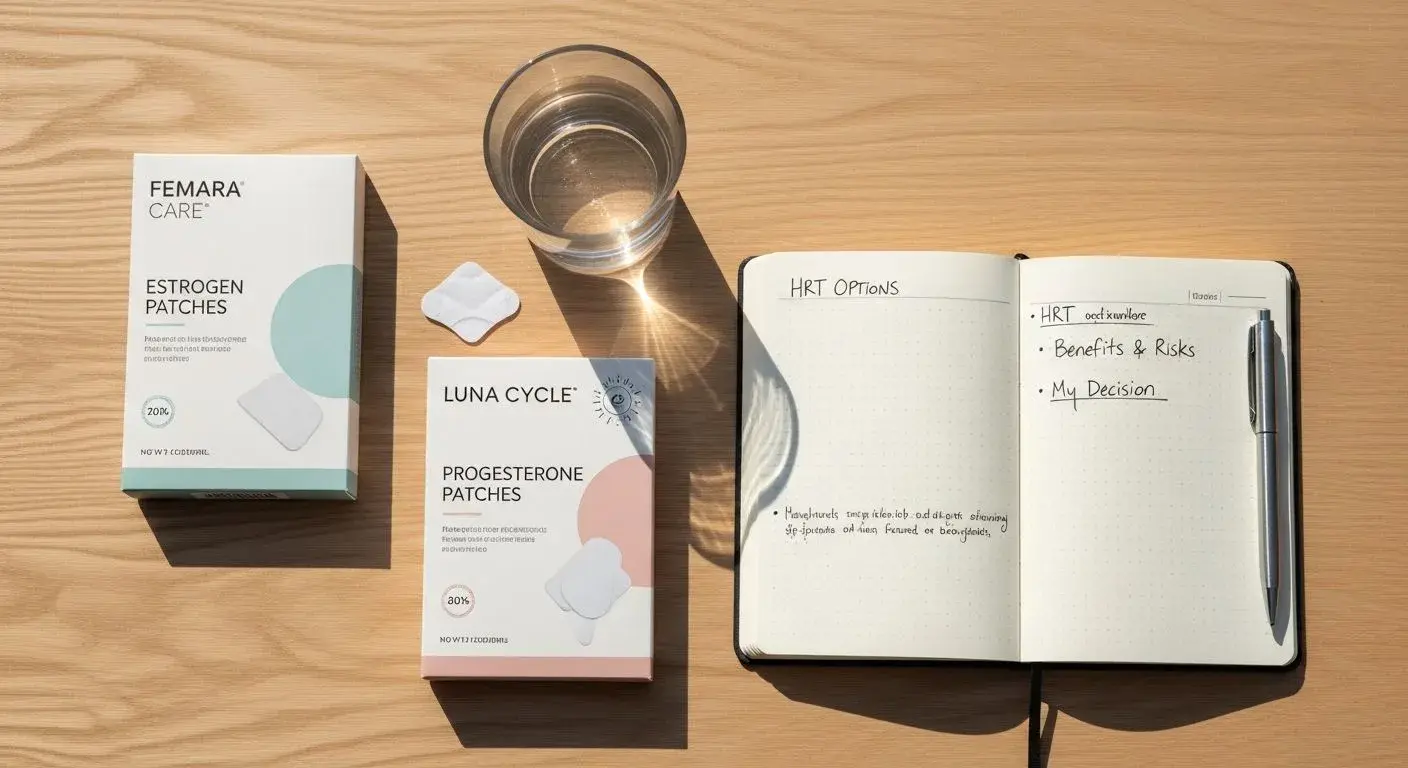
Why HRT Can Make Hair Loss Worse — and What to Do About It
If you are asking 'I am taking HRT, why is my hair loss worse?' the answer is almost always the progestogen component. Switching from a synthetic progestogen to micronised progesterone (also called body-identical or bioidentical progesterone) is often the first thing a menopause specialist will suggest if hair loss worsens on HRT. This change alone resolves the problem for many women.
A second common misconception: HRT is not a hair regrowth treatment. It does not reverse follicle miniaturisation that has already occurred — it may slow or halt further loss by addressing the hormonal driver. Women who begin HRT primarily to rescue their hair and see no dramatic regrowth are sometimes disappointed, but the correct frame is preservation, not restoration. For visible regrowth, topical minoxidil or a dermatology referral for treatments like low-level laser therapy are more directly targeted.
There is also a timing issue: HRT started many years after menopause, when follicle miniaturisation is already advanced, is less effective for hair than HRT started during the perimenopause window. Earlier intervention preserves more follicle function. This mirrors the broader 'timing hypothesis' of HRT benefit that applies to cardiovascular and bone health as well.
Practical Guidance: Getting the Most From HRT for Hair Health
- Ask specifically about the progestogen type: Request micronised progesterone (e.g., Utrogestan) rather than a synthetic progestogen if hair loss is a concern. Not all GPs will raise this distinction proactively.
- Give it time before judging results: The hair cycle means changes take three to six months to become visible. Stopping HRT prematurely due to no immediate improvement may miss the window of benefit.
- Combine with targeted scalp care: HRT addresses the systemic hormone environment; a DHT-blocking shampoo or topical minoxidil works at the follicle level. Using both simultaneously is more effective than either alone for androgenetic hair loss.
- Check your full hormone picture: Thyroid dysfunction is common in menopausal women and independently causes hair loss. If HRT is not helping, a thyroid panel (TSH, free T3, free T4) rules out a concurrent cause. See how hormonal fluctuations affect skin and scalp appearance holistically in our overview of the best menopause skincare and face creams.
The decision to start, adjust, or stop HRT involves individual health history, risk factors, and personal priorities. Always discuss changes to your HRT regimen with a qualified menopause specialist or GP before making adjustments, and never stop HRT abruptly without medical guidance.