
Why Menopause Causes Itchy Breasts and Nipples
Itchy breasts and nipples during menopause or perimenopause are more common than most women are told — yet they are rarely discussed at GP appointments. The reason this happens comes down to one central shift: declining oestrogen. Oestrogen is not just a reproductive hormone. It actively regulates skin hydration, collagen production, sebum output, and barrier integrity across the entire body — including the delicate skin of the breasts and nipple-areola complex.
As oestrogen falls, the skin becomes thinner, drier, and less elastic. The breast skin is particularly vulnerable because it covers a fatty tissue structure with relatively few sebaceous glands, meaning it has less natural oil production to compensate for hormonal dryness. The nipple and areola are even more sensitive — their skin is thinner still, and the nerve endings there are highly responsive to any change in barrier function.
Two misconceptions are worth addressing directly. First, many women assume itchy nipples must signal a breast problem and delay seeking help out of fear — in the vast majority of menopausal cases, it is a skin and hormonal issue, not a breast pathology. Second, some women believe itching only affects 'dry skin types.' In reality, oestrogen loss causes barrier dysfunction in all skin types; those with naturally oilier skin simply notice it later, not never.
The broader pattern of skin changes that accompany this hormonal shift is explained in detail in menopause and perimenopause itching: causes and treatment, which covers the systemic mechanisms behind full-body pruritus during this transition.
Other Causes of Breast Itching Not to Overlook
While hormonal dryness is the most common driver of itchy breasts in perimenopause, it is not the only one — and identifying the correct cause determines whether a moisturiser will be enough or whether a different intervention is needed.
- Bra fabric and laundry products: Synthetic fabrics and elastane trap heat and moisture against already-sensitised skin. Fragrance in detergents is a frequent and overlooked trigger for nipple itching specifically, as the fabric presses directly against the skin for hours.
- Contact dermatitis: New body lotions, shower gels, or even a changed laundry brand can trigger a localised allergic or irritant reaction. The breast skin in perimenopause is more reactive than it was in your 30s due to the compromised barrier — products previously tolerated may now cause problems.
- Paget's disease of the nipple (rare): A persistent, one-sided nipple itch accompanied by scaling, discharge, or a flat or inverted nipple change warrants prompt medical review. This is uncommon, but it is the reason any nipple change that does not respond to standard moisturising within two to four weeks should be assessed by a clinician.
- Eczema and psoriasis flares: Both conditions commonly worsen during perimenopause due to immune dysregulation linked to oestrogen fluctuation. Pre-existing eczema that had been well-controlled may suddenly flare on the breast or nipple area.
The trade-off in this stage: some women reach for steroid creams at the first sign of nipple or breast itching. Low-potency hydrocortisone can temporarily reduce inflammation, but used repeatedly on thin nipple skin it can cause further thinning — a limitation that is rarely communicated upfront. Barrier repair with ceramide-based moisturisers should always be the first step, with steroids reserved for confirmed dermatitis under medical guidance.
What Actually Relieves Itchy Breast Skin During Menopause
Relief from menopausal breast and nipple itching requires addressing the barrier first, then investigating irritant triggers. Topical treatments alone will not provide lasting relief if the skin is being continuously re-exposed to a sensitising agent — whether that is a fragranced soap, a synthetic bra, or a laundry product.
Practical steps that work in practice:
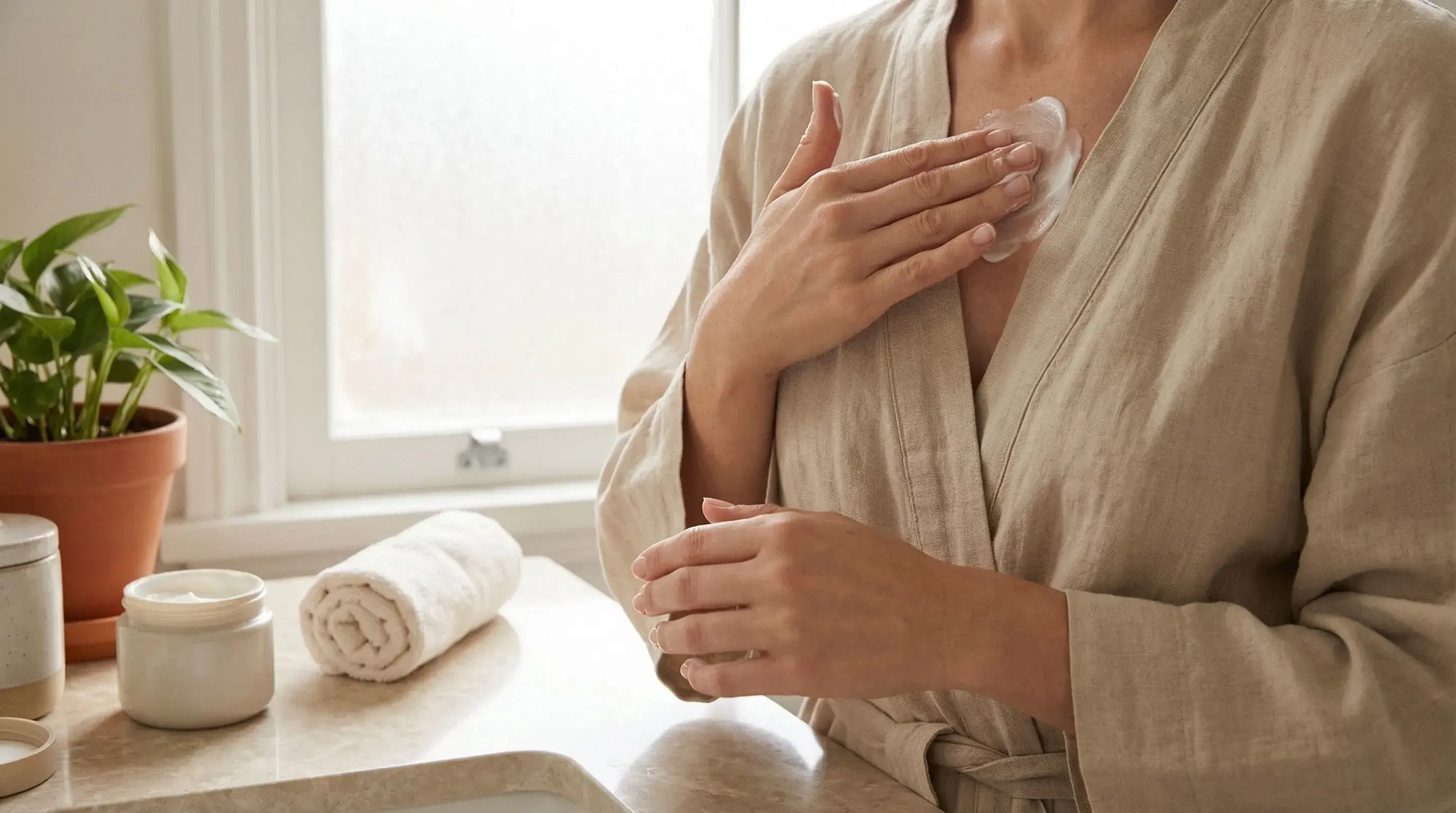
- Moisturise immediately post-shower: Apply an unfragranced, ceramide-rich body lotion to the chest and breast area within three minutes of bathing, while skin is still slightly damp. This significantly improves moisture retention compared to applying to dry skin.
- Switch to natural-fibre bras: 100% cotton or bamboo fabric against the breast reduces friction and allows the skin to breathe. Wash new bras before wearing to remove manufacturing residues.
- Use fragrance-free everything: Shower gel, body lotion, laundry detergent, and fabric softener. This single change resolves a significant proportion of contact-triggered nipple itching within two weeks.
- Consider systemic hormone support: When breast skin itching is part of a wider pattern of menopausal skin changes, HRT (hormone replacement therapy) addresses the root cause rather than managing the symptom surface by surface. This is a conversation to have with a menopause specialist.
For women experiencing itching across the scalp in addition to the body and breast area, the hormonal pattern of diffuse skin sensitivity is explored further in menopause itchy scalp: causes and relief options, which covers how the same oestrogen withdrawal affects scalp skin in parallel.