
Why Itchy Scalp and Hair Loss Happen Together in Women
When itching and shedding coincide, most women assume one is causing the other. The reality is more nuanced: both symptoms frequently share the same root trigger — a decline in oestrogen. Oestrogen plays a direct role in scalp skin integrity and the hair growth cycle. As levels drop during perimenopause and menopause, the scalp loses moisture retention capacity, sebum production shifts, and hair follicles spend less time in the active growth (anagen) phase. The result is a scalp that is simultaneously drier, more reactive, and shedding more than usual.
This hormonal pattern is distinct from conditions like seborrhoeic dermatitis or alopecia areata, which require different treatment approaches entirely. The most common misconception is that scratching causes the hair loss — in reality, the itch and the shedding are parallel symptoms, not a cause-and-effect chain. However, chronic scratching can inflame follicles over time, so managing the itch remains important even when it is not the primary driver. For a full breakdown of scalp-specific hormonal changes, see menopause itchy scalp: causes and relief.
- Oestrogen decline: Reduces scalp hydration and disrupts the hair follicle cycle simultaneously.
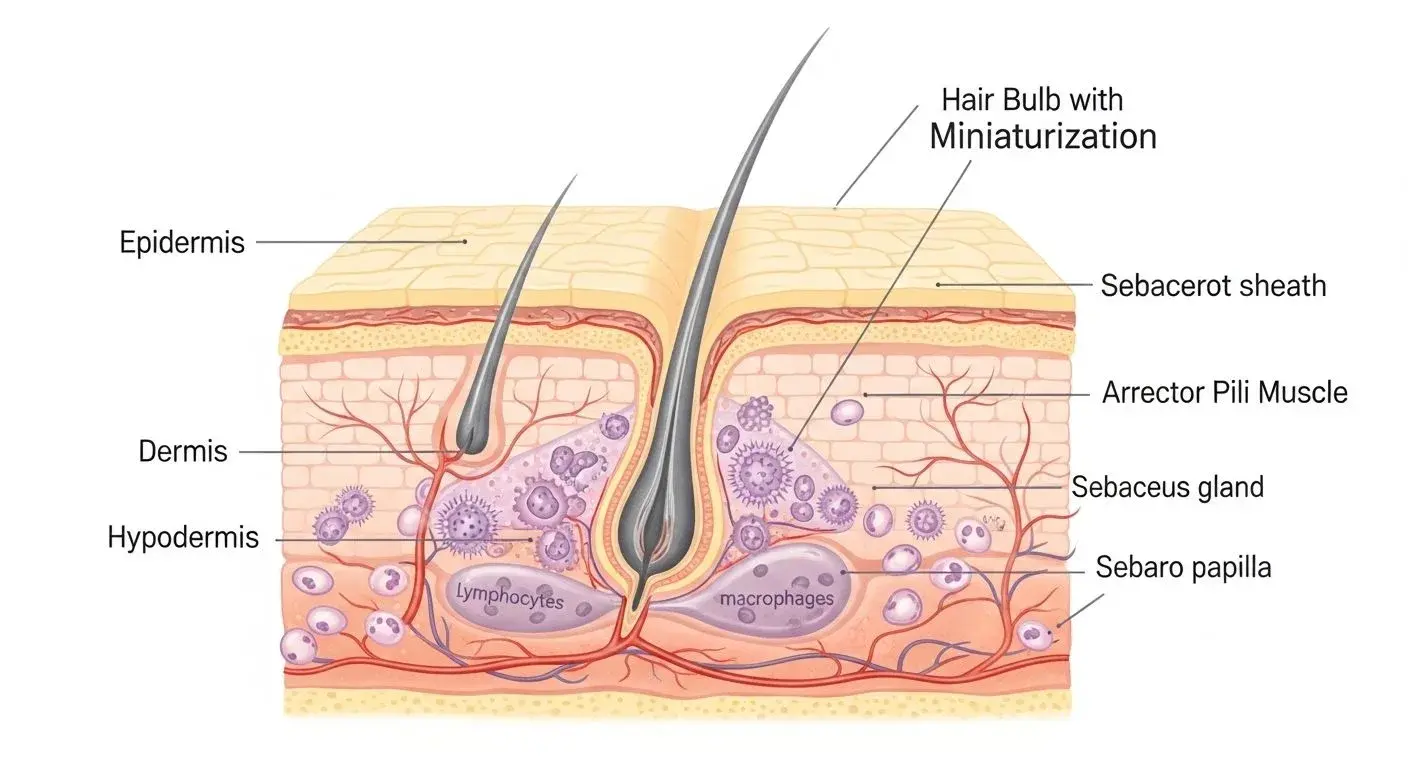
- Androgen sensitivity: As oestrogen falls, androgens become relatively more dominant, contributing to follicle miniaturisation at the crown and temples.
- Barrier dysfunction: A compromised scalp barrier allows irritants and allergens to trigger itch more easily, making the scalp hypersensitive to products it previously tolerated.
What Most Treatments Get Wrong
Standard advice for itchy scalp — switch to a gentle shampoo, avoid sulphates — is reasonable but incomplete when hormonal disruption is the underlying cause. Anti-dandruff shampoos are frequently recommended as a first step, and while they can address fungal overgrowth, they do nothing to restore an oestrogen-depleted scalp barrier. Many women find these formulas worsen dryness, intensifying both itch and breakage rather than resolving either.
One important trade-off: scalp serums containing minoxidil can stimulate regrowth but typically cause a shedding acceleration phase in the first 4 to 8 weeks. This alarms most users into stopping prematurely, before any benefit can materialise. Topical corticosteroids relieve itch effectively short-term but thin the scalp skin with prolonged use, potentially worsening follicle vulnerability over time — the opposite of the intended outcome.
A more targeted approach rebuilds the scalp barrier using ingredients suited to hormonally-changed skin: ceramides restore the lipid layer; niacinamide calms inflammation without steroid risks; and rosemary oil has shown comparable efficacy to 2% minoxidil in small controlled studies for androgenic thinning, with a better tolerability profile for sensitive scalps.
Practical Steps and When to Seek Help
Addressing both symptoms at once means treating the scalp as skin first, hair second. Begin with a hydrating, fragrance-free scalp cleanser used no more than three times per week. Apply a leave-on serum containing niacinamide or ceramides while the scalp is still slightly damp — absorption is significantly higher at this stage. Avoid heat styling directly at the roots, as thermal stress compounds barrier damage on an already compromised scalp.
Where self-care consistently falls short: women with both diffuse shedding and patchy itch concentrated in specific zones. This pattern can signal lichen planopilaris or frontal fibrosing alopecia — inflammatory scarring conditions easily mistaken for hormonal thinning but capable of causing permanent follicle loss if undiagnosed. Early dermatological review matters here, not a trial-and-error approach with off-the-shelf products.
For women whose itching extends beyond the scalp during this life stage, the broader picture of hormonal skin changes is covered in menopause and perimenopause itching: causes and treatment. If hair loss is significant or accelerating, a GP referral for ferritin, thyroid, and androgen panels is worth pursuing before committing to topical treatments, as these deficiencies can amplify hormonal shedding considerably.