
Understanding Maybelline Better Skin Foundation's Promise for Menopausal Skin
Maybelline SuperStay Better Skin Foundation entered the market with an appealing proposition: drugstore pricing with skincare-infused makeup that supposedly improves skin over time. The formula contains antioxidants and micro-correctors intended to even texture while providing medium coverage. For menopausal women watching budgets tighten while skin concerns multiply, this combination sounds ideal—makeup that doesn't just cover problems but potentially addresses them.
The reality requires immediate clarification: no foundation meaningfully improves skin when worn for 6-12 hours then removed. The active ingredient concentrations are too low and contact time too brief for genuine skincare benefits. The 'better skin in three weeks' marketing claim relies on the optical blurring effect making pores and texture appear refined in photos—not actual skin improvement. This matters because approaching this foundation expecting skincare results leads to disappointment, while using it purely as makeup with some gentle ingredients allows proper evaluation.
What the formula does offer is a hydrating base with glycerin and vitamin E that doesn't actively dehydrate menopausal skin the way many drugstore foundations do. The consistency falls between liquid and mousse, creating a lightweight feel that many aging skin types find more comfortable than heavy full-coverage alternatives. Understanding these realistic parameters—good hydrating foundation at accessible price, not miracle skincare—sets appropriate expectations. Explore more foundation options in our guide to age-defying foundations for menopause.
Common Myths vs. What Actually Happens on Menopausal Skin
Myth: Drugstore Foundations Can't Match Premium Performance
The assumption that expensive foundations automatically outperform budget options doesn't hold for menopausal skin. Better Skin Foundation's performance rivals many $40-50 foundations in hydration, blendability, and initial finish. The formula's glycerin content provides moisture comparable to mid-range brands, and the micro-fine texture blends seamlessly on properly prepped aging skin. Where the price difference shows isn't in immediate application quality but in longevity and shade sophistication.
Better Skin lasts 6-8 hours on menopausal skin before requiring touch-ups, while premium formulas often hold 10-12 hours. The shade range, though improved, still struggles with undertone accuracy for olive and deeper skin tones—many menopausal women find themselves between shades or mixing two. However, for fair-to-medium neutral skin tones, the performance-to-price ratio makes expensive foundations hard to justify. The misconception that you must spend more for aging skin denies many women access to perfectly adequate solutions.
Myth: The Formula Actively Reduces Wrinkles Over Time
Marketing imagery showing progressive skin improvement over weeks creates unrealistic expectations. The 'before and after' photos in advertising use professional lighting changes and makeup application differences—not actual wrinkle reduction. The active ingredients (antioxidant fruit extracts and vitamin E) exist at concentrations of less than 1%, far below therapeutic levels that would require clinical testing and different regulatory approval.
What genuinely happens: the formula doesn't worsen skin or cause the dehydration-induced wrinkling that some foundations create. Over time, avoiding foundation-caused damage might mean your skin looks better than if you'd used harsher alternatives, but this is damage prevention, not active improvement. The optical blurring from the formula's soft-focus particles makes pores and fine lines less visible while worn, which photographs well and can boost confidence. But remove the makeup and skin returns to its baseline state. Honest manufacturers would market this as 'gentle, non-damaging coverage' rather than implying skincare benefits.
Myth: SuperStay Name Means Long-Lasting on All Skin Types
The 'SuperStay' branding creates expectations of 24-hour wear that menopausal skin cannot support with this formula. On oily young skin, the foundation may indeed last 12+ hours. On dry, hormonally-depleted skin, it begins breaking down after 6-7 hours as natural oils resurface unevenly and dehydration progresses. This isn't product failure—it's physics. No hydrating foundation (which aging skin requires) can match the longevity of matte, oil-absorbing formulas designed for young skin.
The trade-off becomes clear: you can have comfortable, hydrating foundation that requires afternoon touch-ups, or long-lasting matte formulas that emphasize every line and dry patch by hour three. Most menopausal women choose comfort and accept shorter wear time. Setting the foundation with a hydrating setting spray extends wear to 8-9 hours—nearly enough for a full workday. Understanding this limitation prevents frustration when the foundation doesn't perform like it would on fundamentally different skin. Compare with other options in our non-toxic foundation guide.
Practical Performance: What Works and What Fails
Application Technique Makes or Breaks Results
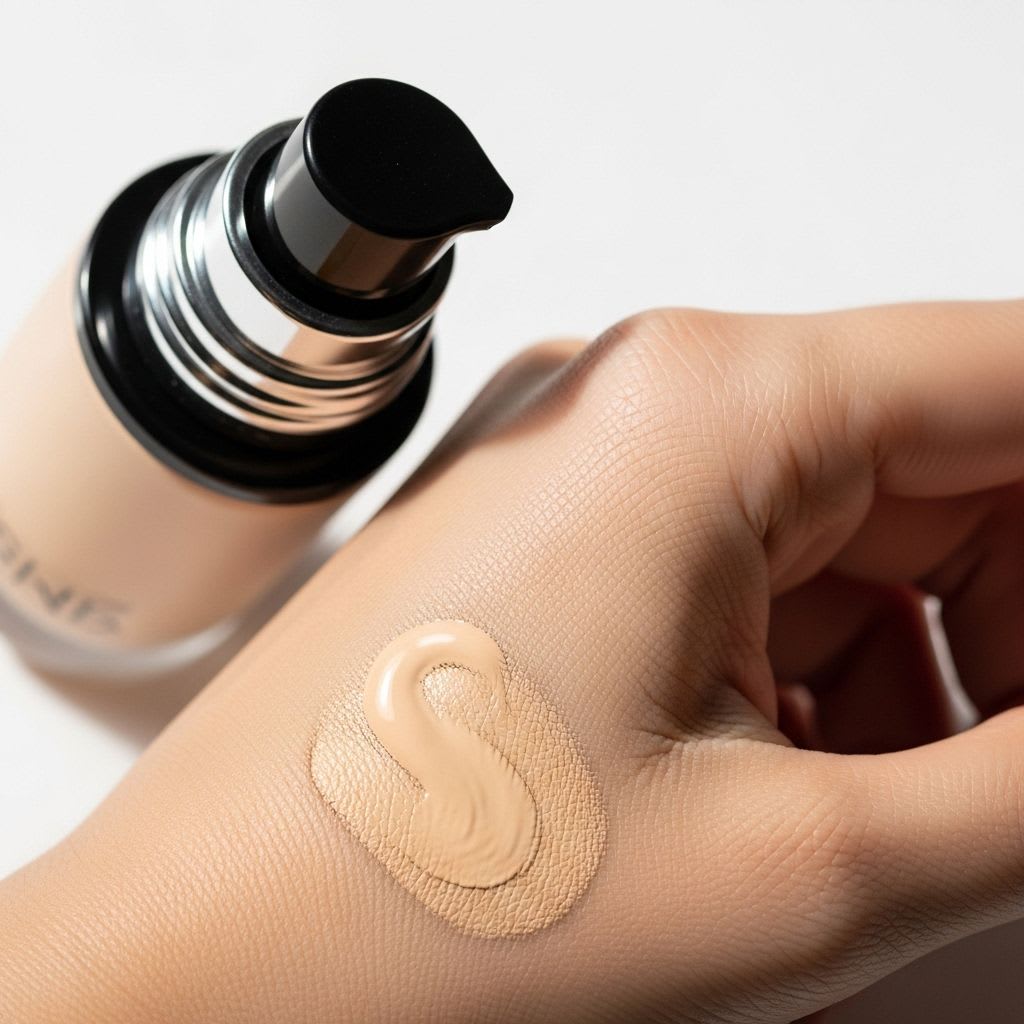
Better Skin Foundation's mousse-like texture behaves differently than standard liquid foundations, requiring adapted application. Using fingers works better than brushes because body heat helps the formula meld with skin, and fingers prevent the streaking that brushes can cause with this consistency. Apply small amounts—less than you think you need—and build coverage gradually. Overloading causes the formula to sit on the surface and emphasize texture rather than smoothing it.
The formula requires fully absorbed skincare underneath. If you apply over damp or tacky serum, the foundation pills and separates into patches within an hour. Wait 10-15 minutes after moisturizer before application. For very dry menopausal skin, mix one drop of facial oil with the foundation on your palm before applying—this prevents the formula from looking flat or emphasizing dehydration lines. This mixing technique isn't in the instructions but dramatically improves results for hormonally dry skin.
Coverage Reality: Medium with Strategic Concealing Needed
The 'medium coverage' claim holds true for general skin tone evening—it handles mild redness, slight discoloration, and creates a unified base. However, it does not adequately cover age spots, broken capillaries, or significant redness that often accompany menopause. You'll need separate concealer for these concerns. Attempting to build Better Skin to full coverage creates a heavy, mask-like appearance that settles into lines and looks obviously made-up.
For menopausal skin priorities, this works: the formula excels at creating an even, natural base that minimizes pores and fine lines through optical blur. It fails at heavy-duty coverage. If your primary concern is evening skin tone and creating a fresh, healthy appearance, Better Skin succeeds. If you need to cover significant pigmentation or vascular issues, you'll feel disappointed by the coverage level and frustrated trying to build it. Knowing this distinction before purchase prevents mismatched expectations.
When Better Skin Foundation Fails Completely: The Extremely Dry Skin Edge Case
Despite its hydrating formula, Better Skin Foundation cannot overcome severe skin dehydration that sometimes occurs during intense hormonal fluctuations or in harsh climates. When skin is so dry that it flakes or has visible rough patches, this foundation emphasizes rather than conceals the texture. The formula contains enough water to require skin with some baseline moisture—it can't hydrate skin from a severely compromised state the way a treatment product can.
If you apply Better Skin to extremely dehydrated skin, it will crack along every line within two hours and create a visibly textured surface. This is the formula's limitation: it works for normal-to-dry menopausal skin but cannot compensate for severe moisture depletion. During these periods, either focus on intensive hydration for 1-2 weeks before using any foundation, or switch temporarily to a pure oil-based tinted moisturizer. This isn't product failure—it's recognition that some skin states require barrier repair before any makeup performs acceptably.
The Honest Verdict: Best for Specific Menopausal Skin Profiles
Maybelline Better Skin Foundation works exceptionally well for menopausal women with fair-to-medium neutral undertones, normal-to-dry skin, and realistic expectations about coverage and wear time. It provides genuine value for those wanting everyday, natural-looking coverage without premium pricing. The formula fails for women with very dry or severely textured skin, those needing full coverage for significant pigmentation, and anyone outside the limited shade range.
The downside no one mentions: this foundation requires good skincare underneath to perform well, meaning the 'budget' aspect partially disappears when you factor in necessary serums and moisturizers. However, you need those skincare products regardless of foundation choice. At $8-12, it's worth testing to see if your skin profile matches the formula's strengths. The risk is low enough that experimentation makes sense—unlike $50 foundations where purchasing the wrong formula creates significant financial waste.