
Why Menopause Reshapes the Body — The Hormonal Mechanism
Body shape change is one of the most reported and least expected aspects of menopause. Women who maintained a consistent shape for decades describe a shift that feels sudden and frustrating: the waist thickens, the belly rounds, and fat that previously sat on hips and thighs begins redistributing centrally. This is not a failure of willpower or routine — it is a direct consequence of changing hormone ratios, and understanding the mechanism is the first step to addressing it effectively.
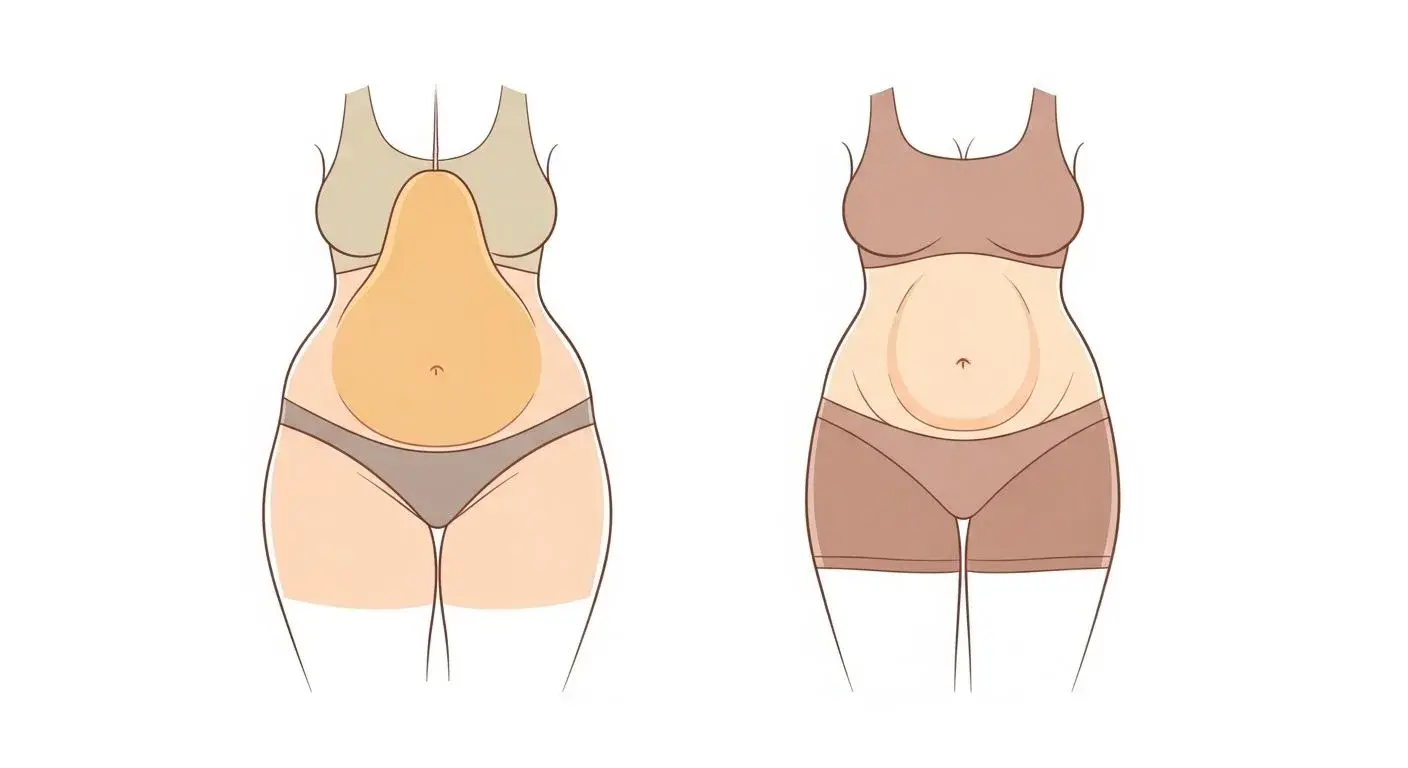
Estrogen directs fat storage toward the hips, thighs, and buttocks — the classic gynoid (pear-shaped) distribution. When estrogen declines, this direction is lost and fat storage defaults to the abdominal region — an android (apple-shaped) pattern more typical of male fat distribution. Simultaneously, declining muscle mass from lower estrogen and growth hormone, combined with insulin resistance that worsens in menopause, means that total body composition shifts even without any change in caloric intake. Many women are eating identically to their pre-menopause years and still gaining central fat.
For the hips and thighs specifically, the picture is more complex. Some women find that hip and thigh fat becomes more difficult to shift in menopause even as belly fat accumulates — this may relate to remaining estrogen receptors in gluteal fat tissue, and to changes in lipolysis (fat breakdown) efficiency in peripheral fat stores. The body is simultaneously depositing fat centrally and retaining it peripherally, which produces the distinctive menopause body shape most women describe.
Common Misconceptions and What the Evidence Actually Supports
The most persistent misconception about menopause body shape is that the solution is simply eating less and exercising more. Caloric restriction alone in menopause is poorly effective and carries real downsides: it tends to accelerate muscle loss (which is already occurring hormonally), worsen bone density, and increase fatigue — all of which compound the changes women are trying to reverse. The research is consistent that resistance training is the highest-leverage intervention for menopause body composition, because it preserves and builds muscle mass, which raises metabolic rate and counteracts the fat gain cycle.
A second misconception is that HRT causes weight gain. The evidence consistently shows that HRT does not cause fat gain and, in fact, may reduce central fat accumulation by restoring estrogen's directing effect on fat storage. Women who report weight gain on HRT are typically experiencing natural menopause-related weight changes that would have occurred regardless. This misconception causes some women to avoid a therapy that could genuinely improve their body composition picture.
The case where standard advice fails is for women with thyroid dysfunction — a condition that becomes significantly more common in perimenopause and post-menopause. Undiagnosed hypothyroidism presents with weight gain, fatigue, and fluid retention that closely mirrors menopause body changes but does not respond to diet, exercise, or HRT. Any woman with rapidly worsening body composition changes should have thyroid function checked before attributing everything to menopause.
Body changes in menopause often come alongside hip and joint discomfort — estrogen also plays a role in connective tissue and inflammation. Our article on back and hip pain in menopause covers why aches in this region intensify alongside shape changes and what interventions address both together.
Practical Strategies and What to Look For in Products
For exercise, the combination that produces the best results in menopausal women is resistance training two to three times per week combined with protein intake of around 1.2 to 1.6 grams per kilogram of bodyweight daily — higher than the general population recommendation, because muscle protein synthesis efficiency declines with age and estrogen loss. Cardio has benefits for cardiovascular health and mood but has limited impact on body composition compared to resistance work at this life stage.
For skincare and body care products that address the visible effects of menopause body changes — including skin laxity on the abdomen, inner thighs, and upper arms — look for formulations with:
- Firming peptides (like acetyl hexapeptide or palmitoyl tripeptide): These signal fibroblasts to increase collagen and elastin production in thinning skin.
- Caffeine: Has a mild but real effect on reducing the appearance of fluid retention and improving microcirculation in areas prone to dimpling.
- Retinol body formulations: Increasingly available in body lotions, these stimulate skin cell turnover and improve the texture of lax skin on arms, thighs, and abdomen over consistent use of several months.
The skin changes that accompany menopause body reshaping are closely tied to the broader hormonal shifts affecting your complexion too. Our guide to menopause skincare for hormonal changes covers how to build a head-to-body routine that addresses laxity, dryness, and texture loss as a unified hormonal picture rather than isolated concerns.