
Why Perimenopause Can Make Hair Suddenly Oilier
It sounds counterintuitive: menopause is widely associated with dryness — dry skin, dry eyes, vaginal dryness. Yet many women in perimenopause notice their scalp becoming noticeably oilier, sometimes for the first time in their adult lives. The explanation lies in the relative rise of androgens as oestrogen declines. Oestrogen normally keeps sebaceous gland activity in check. As it falls, androgens — which stimulate sebum production — become proportionally more dominant, triggering excess scalp oil.
This greasy hair phase is most common in early to mid-perimenopause, when oestrogen fluctuates rather than steadily declining. The unpredictability is part of why this symptom catches women off guard — their hair may feel normal one week and flat with grease the next. Post-menopause, when androgen levels also eventually drop, many women find the oiliness resolves and dryness becomes the dominant concern. Understanding this arc helps set realistic expectations about treatment.
One common misconception: washing hair more frequently fixes the problem. In practice, over-washing can strip the scalp and trigger a rebound effect where sebaceous glands produce even more oil to compensate. The solution isn't less washing — it's smarter washing with the right formulations. If you're also noticing changes on your face, the same hormonal sebum shift is likely responsible. oily skin during menopause and perimenopause follows the same underlying mechanism.
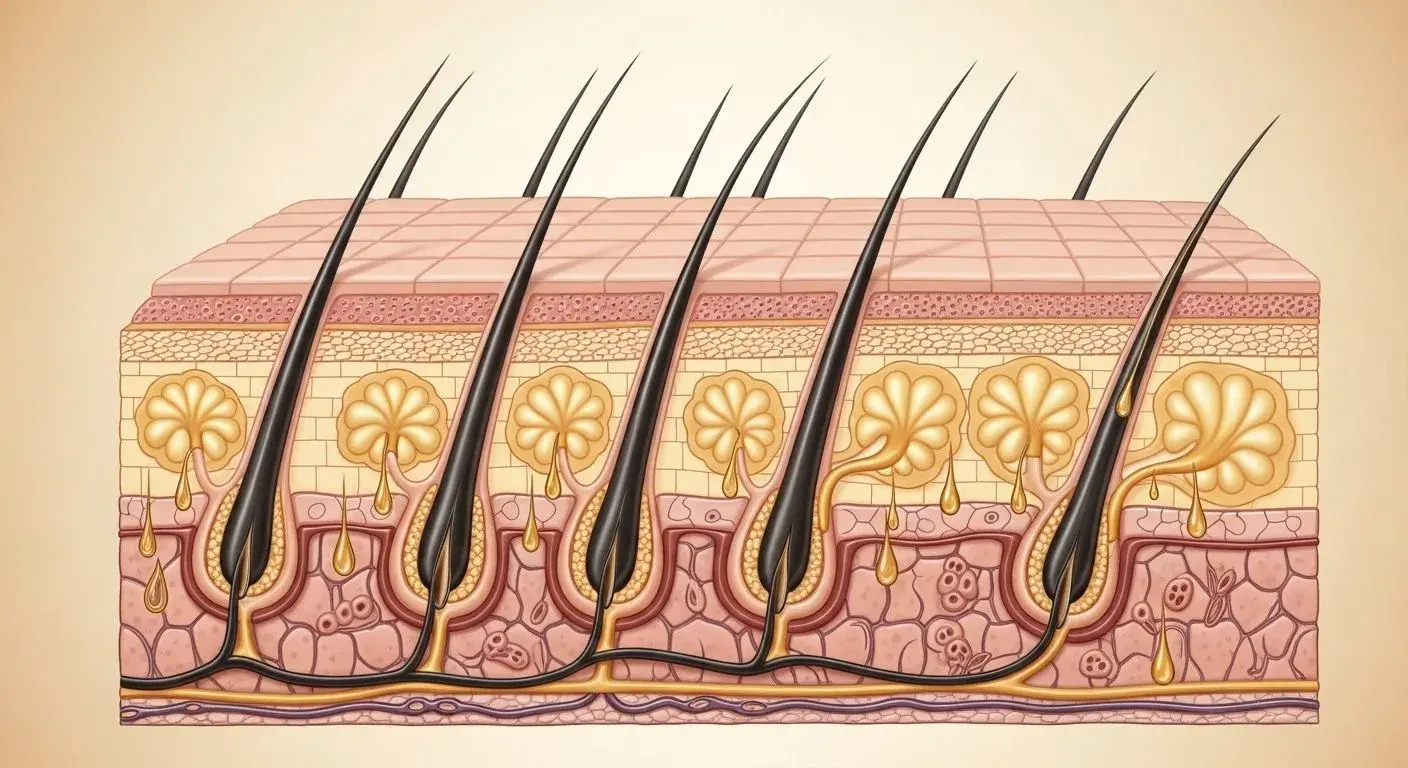
What Actually Controls Scalp Oil — and What Doesn't
Managing menopause-related greasy hair requires a two-part approach: regulating the scalp environment and, where appropriate, addressing the hormonal driver itself. Most people focus only on the first.
- Clarifying or sebum-balancing shampoos: Look for formulas containing salicylic acid, zinc pyrithione, or tea tree oil — these reduce scalp buildup and calm overactive sebaceous activity without stripping moisture from the hair shaft.
- Conditioner placement: Apply conditioner to mid-lengths and ends only — never the scalp. Many women with oily roots skip conditioner entirely, which leads to dry, damaged ends and a rough texture.
- Dry shampoo (strategic use): Effective for absorption between washes, but daily dry shampoo use can clog follicles over time. Use 2–3 times per week maximum and clarify thoroughly at the next wash.
- Hormone Replacement Therapy (HRT): For women with broader menopausal symptoms, HRT can address the androgen-oestrogen imbalance at source. Some women report significant improvement in scalp oiliness within months of starting oestrogen therapy. This is a conversation to have with a menopause specialist.
One edge case worth noting: if scalp oiliness is accompanied by significant hair thinning, this may signal androgen-driven follicle miniaturisation rather than simple sebum excess. These require different treatment priorities — sebum control alone won't address follicle loss.
Building a Routine That Works at This Stage
The most effective approach combines scalp-focused products with lifestyle adjustments that reduce the hormonal fluctuations driving sebum spikes. Practically, this means:
- Wash frequency: Every other day is generally optimal for perimenopausal oily scalp — frequent enough to manage grease without triggering rebound sebum. Use lukewarm water; hot water stimulates sebaceous glands.
- Diet and blood sugar stability: High-glycaemic foods spike insulin, which in turn increases androgen output. Reducing refined carbohydrates can have a modest but real effect on sebum production.
- Scalp massages with light, non-comedogenic oils: Counterintuitively, adding a small amount of jojoba oil (which mimics sebum) to a dry scalp can signal the glands to reduce production — but only in women with more dry-oily combination patterns, not uniform grease.
If you're navigating other hormonally driven skin and hair changes alongside greasy hair, product choices matter across your whole routine. foundations for oily mature skin during menopause face the same sebum-control challenge — the same ingredient logic (niacinamide, zinc, oil-free formulas) that works on skin often applies to scalp product selection too. Managing menopause and greasy hair is a long game, but with the right formulations and realistic expectations, most women see clear improvement within two to three months.