
The Hormonal Reason Your Skin Suddenly Feels Greasy
Oily skin during menopause is counterintuitive — most women expect dryness, so greasiness catches them off guard. What is actually happening is a shift in the androgen-to-estrogen ratio. As estrogen falls, androgens (including testosterone) become relatively dominant, even if their absolute levels remain unchanged. Androgens directly stimulate sebaceous glands, increasing sebum output. The result: shiny skin, clogged pores, and for many women, unexpected adult breakouts alongside the oiliness.
This can feel particularly frustrating because the skin often behaves inconsistently. The T-zone may be visibly oily by midday while the cheeks feel dry and tight — a combination pattern that does not respond well to products formulated for either purely oily or purely dry skin. Women in early perimenopause (late 30s and 40s) often experience this phase before the skin eventually shifts toward dryness in post-menopause, so the greasiness may be temporary but still needs management in the meantime.
One frequently missed trigger: stress-induced cortisol spikes also stimulate sebum production. The sleep disruptions and anxiety that accompany perimenopause can compound the hormonal greasiness independently of estrogen. Addressing both the hormonal root and lifestyle factors gives the most consistent results. For a full overview of how foundation choices interact with oily mature skin, see our piece on the best foundation for oily mature skin during menopause.
What to Use — and What Makes It Worse
The single biggest mistake women make with perimenopausal oily skin is over-cleansing. Harsh foaming cleansers and alcohol-based toners strip sebum aggressively, which triggers a rebound effect: sebaceous glands compensate by producing even more oil. Menopausal skin — even oily menopausal skin — has compromised barrier function compared with younger oily skin. The goal is regulation, not stripping.
Ingredients that work well for this specific skin profile:
- Niacinamide (5–10%): Reduces sebum production by inhibiting lipid synthesis in sebaceous glands. Also supports the skin barrier and reduces pore appearance — a genuinely multi-functional ingredient for this skin type.
- Salicylic acid (0.5–2%): Oil-soluble, so it penetrates pores to clear sebum and dead skin cells. Use 2–3 times weekly rather than daily to avoid irritation on mature skin.
- Oil-free, non-comedogenic SPF: Many women skip moisturiser thinking it worsens shine, but unprotected dehydrated skin overproduces sebum as compensation. A lightweight SPF 30 gel-formula addresses both needs.
- Zinc-containing products: Zinc has mild anti-androgenic properties and reduces sebaceous activity. Found in some sunscreens and targeted serums.
One honest trade-off: the very actives that regulate sebum (salicylic acid, retinol, exfoliating acids) can sensitise perimenopausal skin more than they would have at 25. Building up frequency slowly — starting once a week and increasing over a month — prevents the common outcome of a reactive, red, oily face.
Building a Routine That Works Long-Term
Perimenopausal oily skin requires a different mental model than oily skin at other life stages. You are not treating a chronic skin type — you are managing a transitional hormonal state that will likely shift again in a few years. That means staying flexible and reassessing your routine every 3–4 months.
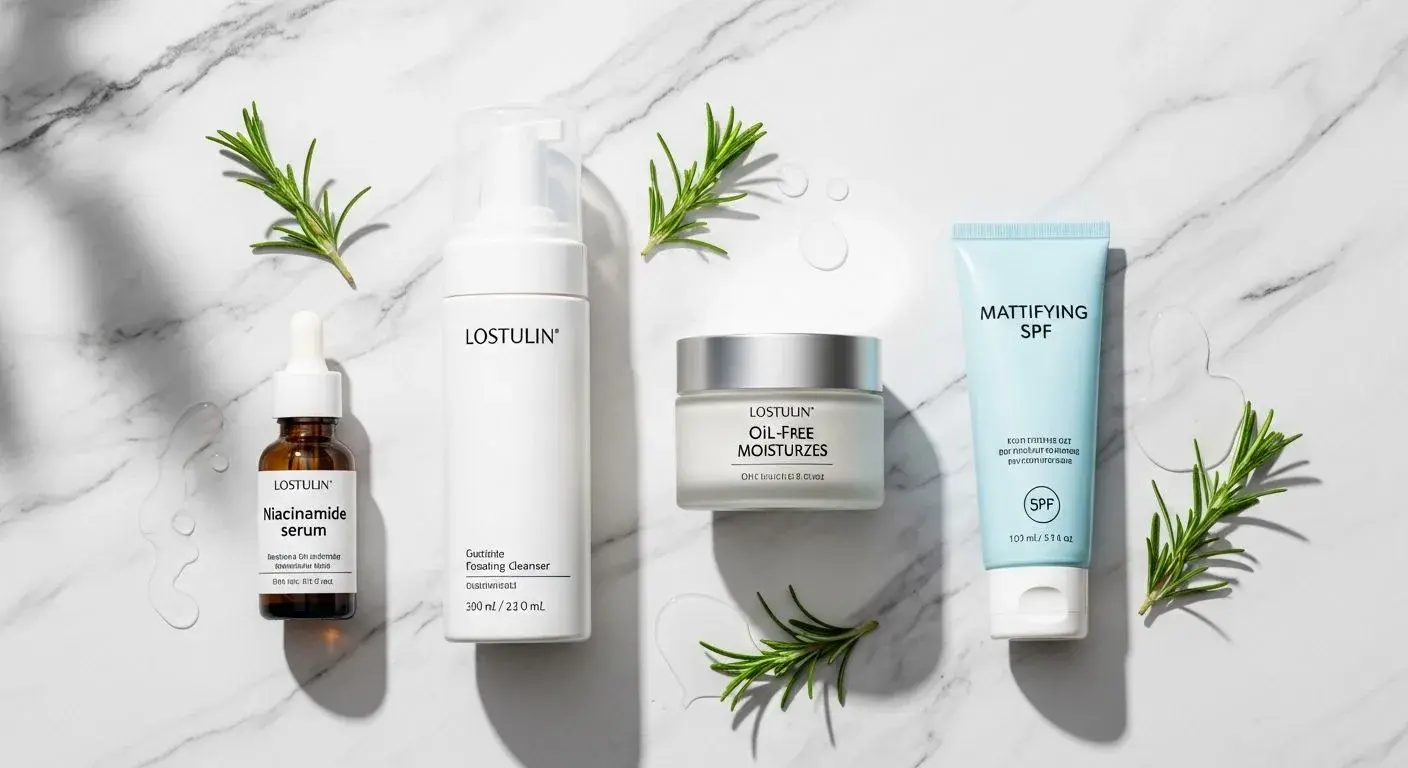
A simple framework that works for most women in this stage: a pH-balanced (not foaming) cleanser morning and evening; niacinamide serum applied after cleansing; a lightweight oil-free moisturiser; and SPF 30+ as the final morning step. In the evening, substituting the moisturiser for a low-dose retinol product (0.025%) two to three nights per week adds sebum-regulating and anti-ageing benefit without tipping into irritation.
For women whose oily skin is accompanied by breakouts — which is extremely common at this stage — the causes and treatment approach are closely related. Our detailed article on oily and greasy skin causes during perimenopause covers the sebum-acne connection in more depth. The key takeaway: this is a manageable condition, and with the right actives and realistic expectations, most women see significant improvement within 8–12 weeks.