
The Hormonal Reasons Behind Increased Thirst in Perimenopause
Increased thirst during perimenopause is a real and underappreciated symptom. While it is easy to dismiss as simply 'not drinking enough', the hormonal mechanisms behind it are specific and worth understanding — particularly because excessive thirst can also be a sign of conditions that become more common during this transition. Estrogen and hydration regulation: Estrogen influences vasopressin (ADH), the hormone responsible for signalling the kidneys to retain water. As estrogen declines, vasopressin activity may become less efficient, causing the kidneys to release more water — which in turn triggers thirst as the body tries to maintain hydration. Hot flushes and night sweats compound this by causing acute fluid loss that standard daily hydration may not compensate for.
Dry mouth, which often accompanies increased thirst, is driven by declining saliva production as estrogen drops. The two symptoms reinforce each other — dry mouth generates a thirst signal even when body water levels are technically adequate. Both symptoms are related to the broader pattern of mucous membrane dryness in menopause that also affects the scalp and skin — see our guide on menopause itchy scalp and skin dryness for related information.
When Thirst During Perimenopause Needs Medical Attention
Critical distinction: Polydipsia (abnormal, unquenchable thirst) is a key symptom of type 2 diabetes and thyroid dysfunction — both conditions that increase in prevalence during perimenopause. If thirst is extreme, accompanied by frequent urination, blurred vision, unexplained weight loss, or fatigue that goes beyond typical menopause tiredness, a fasting blood glucose and thyroid panel should be requested promptly.
Misconception 1: Drinking more water is always the right response. It is the right response for hormonal thirst. But if thirst is driven by high blood sugar, drinking more water does not address the cause and delays diagnosis. Context and associated symptoms matter.
Misconception 2: Caffeinated drinks count toward your daily fluid intake. Caffeine is mildly diuretic and in women already losing more fluid through hot flushes and night sweats, relying on coffee and tea for hydration can perpetuate rather than resolve thirst. Water and herbal teas are more effective. For related skin dryness symptoms, see our article on menopause skin changes and oiliness.
Practical Hydration Strategies for Perimenopause
- Increase base hydration: Women experiencing hot flushes and night sweats need more than the standard 2 litres per day. Aim for 2.5-3 litres, increasing further on hot days or after exercise.
- Add electrolytes during hot weather or heavy night sweats: Sodium, potassium, and magnesium lost through sweating cannot be replaced by water alone. A pinch of sea salt and a squeeze of lemon in water is a simple, cost-effective electrolyte support.
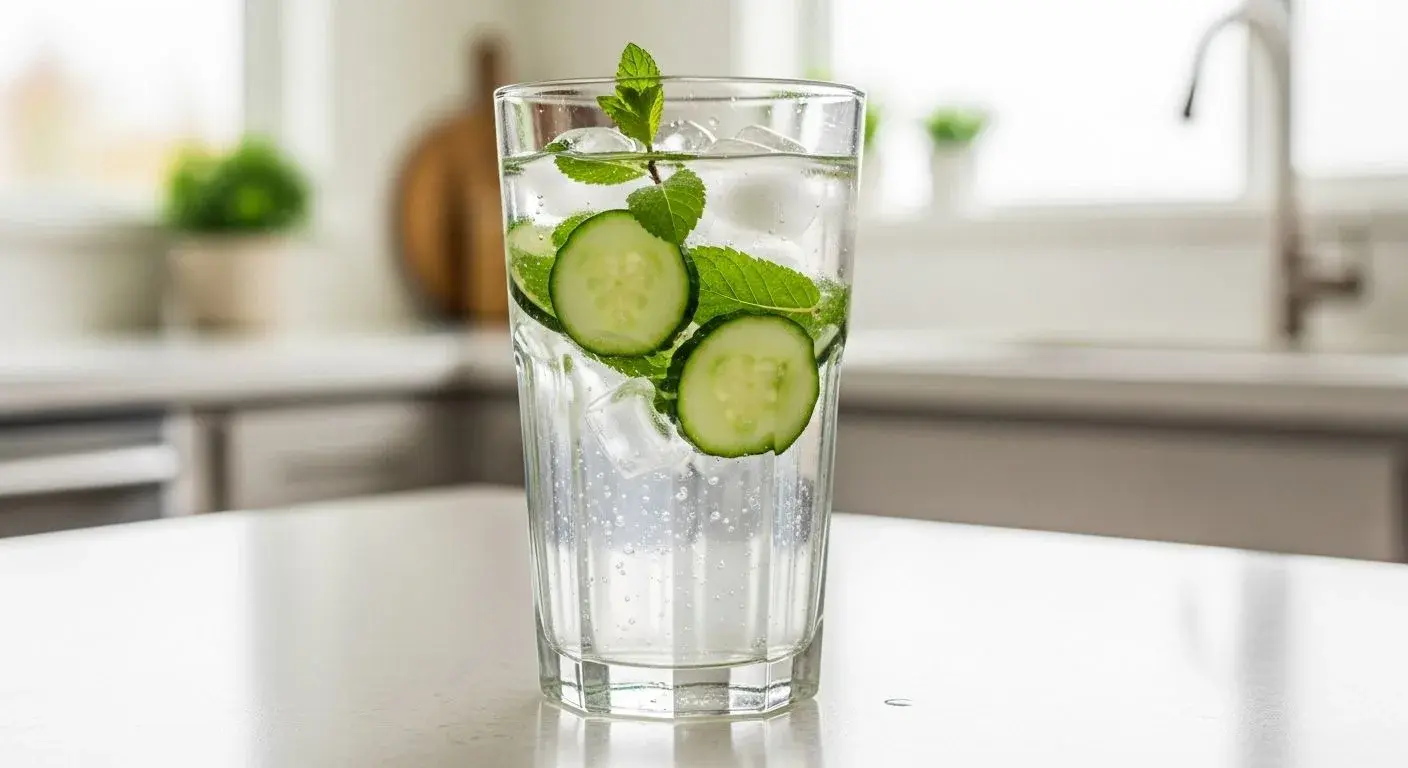
- Eat water-rich foods: Cucumber, celery, watermelon, strawberries, and courgette provide hydration alongside fibre and micronutrients, supporting hydration more sustainably than fluids alone.
- Time hydration strategically: Front-loading hydration in the morning and afternoon (rather than drinking large amounts at night) reduces the disruption of nocturia to sleep — a significant concern during perimenopause.